Maintaining healthy, playable turf across a golf course requires much more than simply turning on an irrigation system. Greens, tees, fairways, roughs, landscaping, and practice areas all depend on a consistent supply of water, and the quality of that water can have a significant impact on both turf health and irrigation system performance.
At the same time, golf courses are under increasing pressure to use water responsibly. According to the Golf Course Superintendents Association of America, U.S. golf courses used 31 percent less water in 2024 than they did in 2005. The organization reports that improved efficiency at existing golf facilities accounted for approximately two-thirds of that reduction.
For golf course operators, that creates an important challenge: protect turf quality while conserving water and making the most of available water sources. Effective golf course water treatment and irrigation filtration can be an important part of achieving both objectives.
At Yardney Water Filtration Systems, we design and engineer filtration solutions for demanding applications, including golf, turf, landscape, and agricultural irrigation. By matching filtration technology to source water conditions and irrigation requirements, we help facilities protect irrigation infrastructure, improve water management, and support reliable turf maintenance.
Golf Course Irrigation Begins With Water Quality
Golf courses can obtain irrigation water from many different sources. Depending on the property and region, water may come from wells, ponds, lakes, canals, municipal systems, surface water, or reclaimed and recycled water. Each source can bring its own water-quality challenges.
Surface water, for example, can contain algae, organic matter, sediment, sand, silt, and other suspended solids. Well water may contain mineral constituents such as iron or manganese. Recycled water can help reduce reliance on potable water supplies, but its chemistry may require additional management.
The United States Golf Association highlights this balance in its discussion of recycled-water irrigation. Recycled water can provide a more reliable and cost-effective irrigation source in some situations, but its quality must be monitored because constituents such as salts can affect turf and soil conditions.
This is why golf course irrigation water quality cannot be separated from irrigation performance. Before selecting filtration equipment, operators need to understand what is actually in their water and how those characteristics may affect the system.
Poor Water Quality Can Become an Irrigation Problem
An irrigation system contains numerous components with relatively small passages and precise operating requirements. Sprinkler nozzles, valves, pumps, piping, and other equipment all depend on water moving through the system consistently.
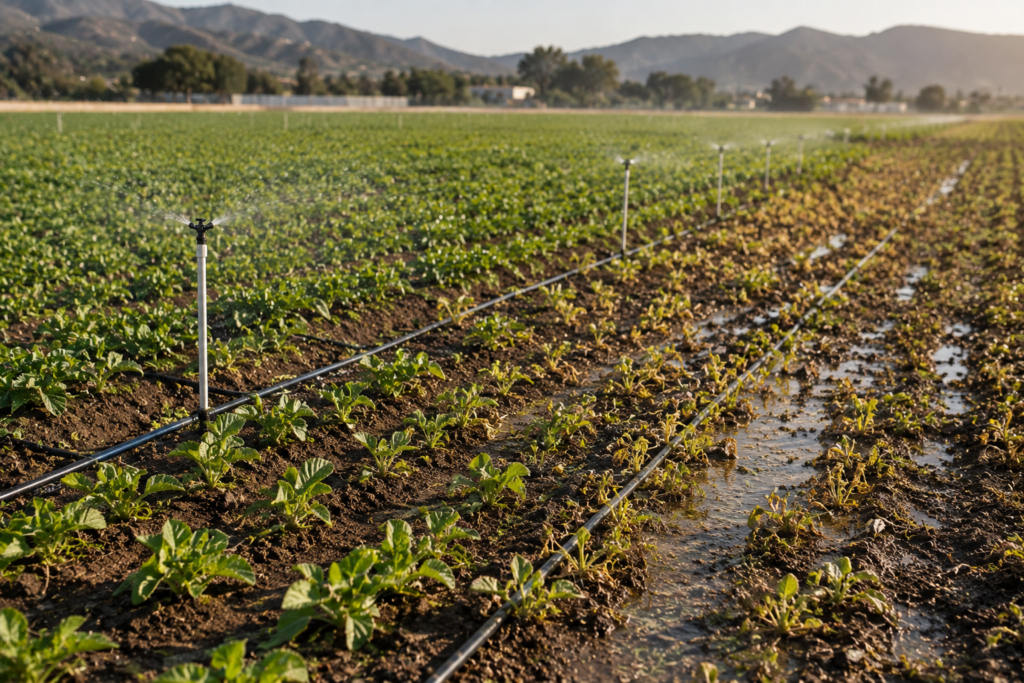
When irrigation water carries excessive suspended solids, organic material, algae, or other debris, those contaminants can accumulate throughout the system. Sprinkler heads and nozzles may become partially obstructed. Flow can become inconsistent. Distribution patterns can change, leaving some turf areas receiving more water than necessary while others receive too little.
Those inconsistencies can quickly become visible on a golf course. A superintendent may notice dry spots, uneven turf color, stressed areas, or locations that require additional hand watering. Staff may spend more time cleaning sprinkler components or troubleshooting problems that actually began with the source water.
Proper water filtration for golf course irrigation helps address contaminants before they move deeper into the irrigation network. Rather than repeatedly responding to clogged or poorly performing components, the goal is to reduce the amount of problematic material entering the system in the first place.
Filtration Helps Protect Turf Through Better Distribution
The relationship between filtration and turf health is indirect but important. A filter does not grow healthy turf. It helps the irrigation system deliver water more reliably so turf managers can provide the conditions the grass needs.
Uniform irrigation matters because different sections of a golf course already experience different environmental conditions. Greens, tees, fairways, roughs, shaded areas, slopes, and high-traffic locations may have different water requirements. When clogged or restricted irrigation components are added to those variables, water management becomes even more difficult.
Reliable golf course irrigation filtration helps maintain cleaner water throughout the system and reduces one source of inconsistent distribution. That supports more precise irrigation decisions instead of forcing crews to compensate for avoidable system problems.
The result is not simply better-looking turf. Consistent irrigation can also help superintendents avoid unnecessary watering that occurs when they are trying to compensate for areas receiving inadequate coverage.
Sand Media Filtration for Golf Course Irrigation
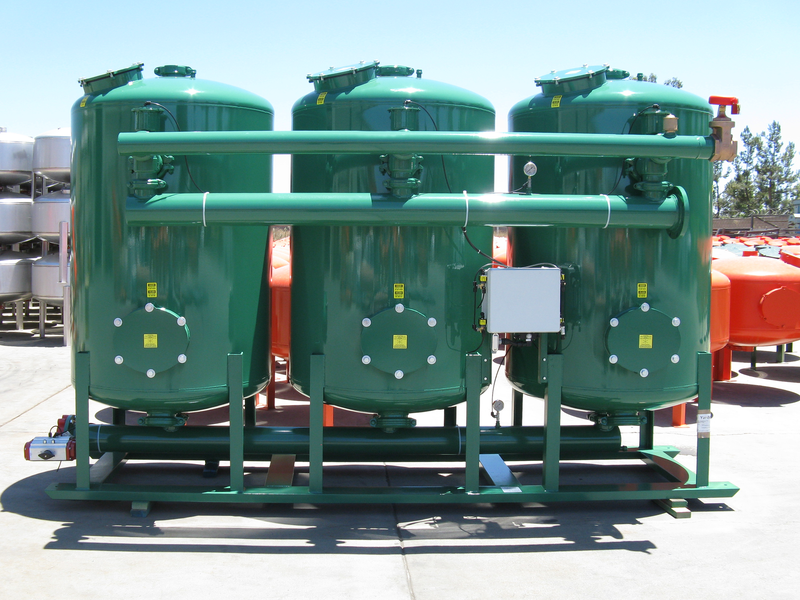
One of the technologies available from Yardney Water Filtration Systems is sand media filtration, a proven filtration approach used in golf, turf, landscape, agriculture, municipal, commercial, and industrial applications.
Sand media filtration is particularly useful when source water contains organic material and suspended solids. Water passes through a carefully selected media bed, where contaminants are captured before the filtered water continues into the irrigation system.
For golf courses drawing from ponds, lakes, reservoirs, canals, or other surface-water sources, this type of filtration can be especially valuable because water quality can change throughout the year. Algae growth, storm runoff, seasonal organic matter, and changing source-water conditions can all affect irrigation water.
Yardney Water Filtration Systems offers backwashing media filtration technologies designed for demanding applications. Automatic backwashing allows accumulated contaminants to be removed from the filter media so the system can continue operating effectively without requiring the filtration process to become an ongoing manual burden for maintenance personnel.
Different Water Sources May Require Different Filtration Solutions
There is no single filter that is appropriate for every golf course. Two courses with similar acreage and irrigation demands can require very different water treatment solutions because their source water is different.
That is why filtration should begin with the application rather than the equipment.
Yardney Water Filtration Systems offers several filtration technologies that allow us to engineer solutions around specific water conditions. Our industrial and commercial product line includes Sand Media, Multi-Media, and Granular Activated Carbon filtration, along with other media selections for specialized applications.
Depending on water chemistry and treatment objectives, specialized media can also address constituents such as iron, manganese, and arsenic. These issues may be especially relevant when facilities depend on groundwater or other sources with naturally occurring mineral content.
The key is proper system selection. Understanding the source water, contaminant load, flow requirements, pressure conditions, irrigation equipment, and desired water quality helps determine which filtration approach makes sense for a particular property.
Recycled Water Can Expand a Golf Course’s Water Options
Water conservation is not simply about applying less water. It is also about using available water resources more strategically.
Reclaimed and recycled water can provide golf facilities with an alternative to relying exclusively on potable water. In its latest national survey, GCSAA reported that recycled water represented 19 percent of the irrigation water sources identified by surveyed golf facilities.
The opportunity is significant, but alternative water sources also reinforce the importance of understanding water quality. Recycled water can contain different levels of salts, suspended material, nutrients, and other constituents depending on the source and treatment process.
The U.S. Environmental Protection Agency WaterSense program similarly notes that alternative water sources can vary considerably in quality and should be matched carefully with their intended use and any necessary treatment.
For golf facilities exploring water reuse and sustainability, filtration can therefore become part of a larger water-management strategy. Yardney Water Filtration Systems can help evaluate filtration needs so alternative sources can be incorporated appropriately into irrigation infrastructure.
Water Conservation Depends on the Entire Irrigation System
Filtration is important, but effective golf course water conservation requires the entire irrigation system to work together.
Modern golf course water management may include weather data, soil-moisture monitoring, irrigation scheduling, efficient sprinkler technology, leak detection, targeted hand watering, drought-tolerant turf selections, and careful management of irrigated acreage. Filtration supports these strategies by helping protect the infrastructure responsible for delivering the water.
Consider a sophisticated irrigation schedule operating through partially clogged sprinkler nozzles. The controller may determine exactly how long a zone should run, but poor water distribution can prevent that carefully calculated irrigation from reaching the turf as intended.
Clean, reliable irrigation water helps the rest of the system perform closer to its design. That means water filtration systems should be viewed as part of a comprehensive conservation strategy rather than as an isolated piece of equipment.
Reducing Maintenance While Protecting Irrigation Infrastructure
Water quality problems do not only affect turf. They can also create ongoing maintenance demands.
When debris repeatedly reaches sprinklers and other irrigation components, maintenance teams may spend valuable time cleaning nozzles, flushing lines, addressing restricted flow, or diagnosing inconsistent coverage. Over time, these recurring problems can increase operating costs and pull staff away from other course-maintenance priorities.
An appropriately designed automatic backwash filtration system can reduce the amount of debris moving downstream while automatically cleaning accumulated material from the filter. That combination can help facilities maintain filtration performance while reducing the need for frequent manual intervention.
For Yardney Water Filtration Systems, reliability is a central part of system design. Our filtration technology has been used across hundreds of applications and thousands of installations. We use that experience to engineer solutions around actual operating conditions rather than treating every irrigation application the same.
Building a More Sustainable Golf Course Water Strategy
Water availability is likely to remain an important issue for golf facilities, particularly in regions facing drought, population growth, competing water demands, or restrictions on potable water use. Building resilience requires facilities to think beyond how much water they use today.
That may mean evaluating alternative water sources, improving irrigation efficiency, addressing aging infrastructure, increasing monitoring, or treating source water so it can be used more reliably.
Golf course water treatment can support each of these objectives by helping facilities make better use of the water they already have access to. A pond containing high levels of suspended organic material may become a more reliable irrigation source with appropriate filtration. A reclaimed-water supply may become easier to integrate when water quality is properly evaluated and managed.
At Yardney Water Filtration Systems, we approach filtration as part of this larger water-management picture. Our objective is to help golf facilities develop dependable irrigation water filtration solutions that protect infrastructure, support turf management, and contribute to long-term water conservation.
Frequently Asked Questions About Golf Course Water Treatment
Golf course water conditions vary considerably from one property to another. The following questions can help facility managers and superintendents begin evaluating their filtration needs.
What type of filtration is best for a golf course?
The right filtration technology depends primarily on the water source and the contaminants present. Surface water containing algae, organic matter, or suspended solids may require a different solution than groundwater containing mineral constituents. Yardney Water Filtration Systems evaluates the application and water conditions before recommending a filtration approach.
Can filtration help reduce clogged golf course sprinklers?
Yes. Proper irrigation filtration can remove suspended solids and other contaminants before they travel through irrigation piping and reach sprinkler components. Reducing those contaminants can help decrease clogging and support more consistent irrigation performance.
Can golf courses use recycled water for irrigation?
Many golf facilities use reclaimed or recycled water as part of their irrigation strategy. However, the water should be evaluated because its chemistry and contaminant profile may differ from potable water or other traditional sources. Appropriate treatment, monitoring, and management depend on the specific water supply.
How does automatic backwashing benefit golf course irrigation?
Automatic backwashing removes accumulated contaminants from filter media as operating conditions require. This helps maintain filtration performance while reducing the amount of manual cleaning needed, making it well suited to large irrigation applications where dependable operation is important.
Why Partner with Yardney Water Filtration Systems
Golf courses need irrigation systems that perform reliably under demanding conditions. At Yardney Water Filtration Systems, we bring decades of filtration experience to golf, turf, landscape, agriculture, commercial, industrial, and municipal water applications. Our filtration technologies have been tested across hundreds of applications and thousands of installations, giving us practical experience with a wide variety of source-water conditions.
For golf course operators, that means filtration can be engineered around the property rather than forcing the property to work around a generic filtration system. Whether the objective is protecting irrigation equipment, improving the reliability of surface water, incorporating recycled water, reducing maintenance demands, or supporting a broader water conservation and sustainability strategy, we can help develop a solution built around those priorities.
Healthy turf and responsible water management do not have to be competing objectives. With the right golf course water treatment and irrigation filtration system, facilities can protect the infrastructure that keeps turf healthy while making better use of an increasingly valuable resource. To discuss your golf course irrigation water needs with Yardney Water Filtration Systems, call 951.656.6716 or email [email protected].