1,2,3-Trichloropropane (TCP) Water Treatment Systems
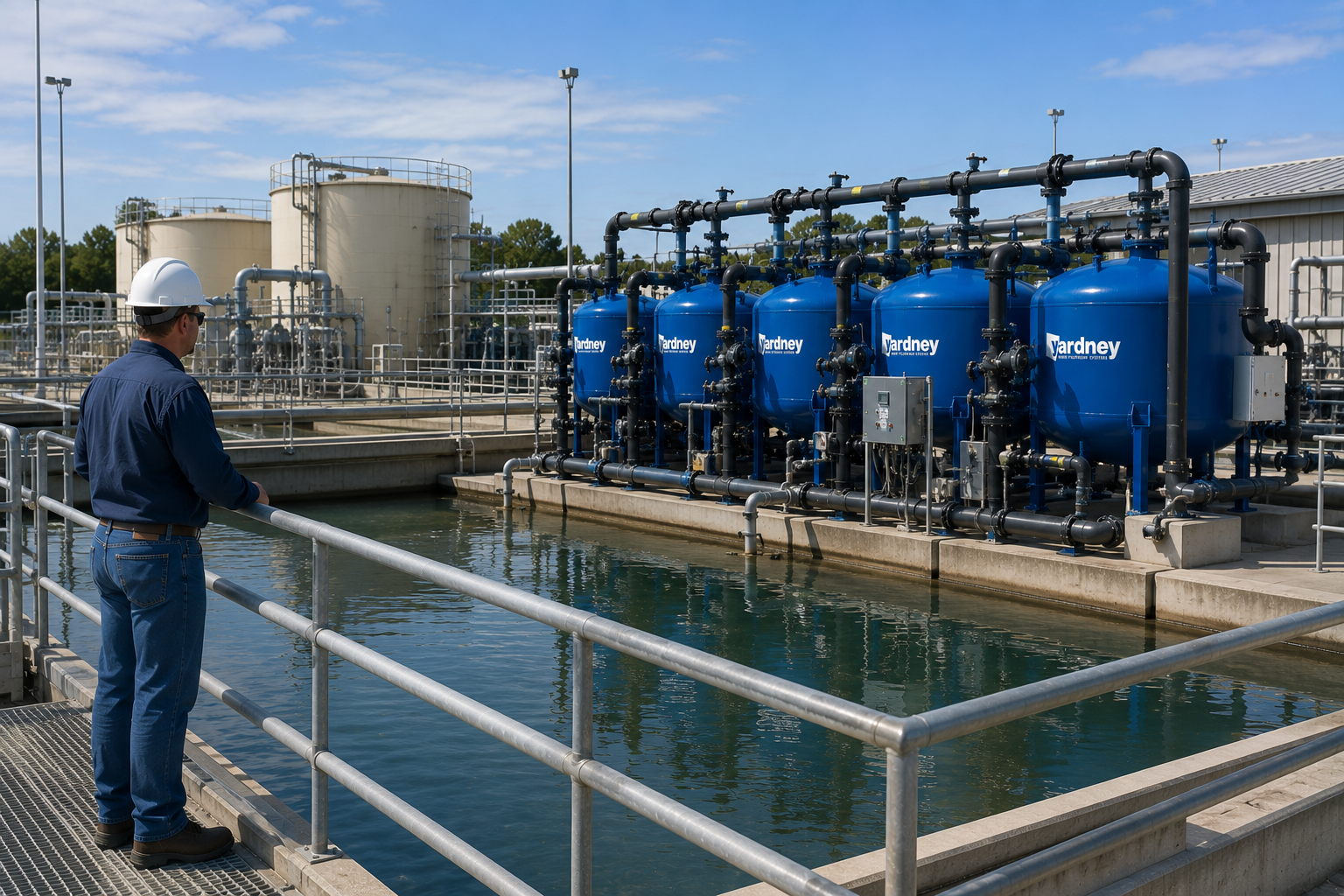
1,2,3-Trichloropropane (TCP) treatment for municipal water relies on specialized processes, most commonly granular activated carbon, with filtration protecting those processes from solids.
Yardney builds GAC systems on 72-inch shells from 5 gpm, and Free Flow systems are listed for TCP removal.
TCP treatment programs typically rely on specialized processes where pretreatment and consistent water quality are important for reliable results. Suspended solids can interfere with downstream treatment efficiency, so removing them protects equipment and keeps operation consistent as source water changes.
California designated granular activated carbon as the best available technology for TCP because it has proven full-scale results. Carbon beds work best when particulates are removed upstream.
Protect Carbon Beds: Remove solids that interfere with downstream treatment efficiency.
Consistent Operation: Hold performance steady as source water conditions change.
Protect Equipment: Reduce solids loading on valves, underdrains, and piping.
Scalable Systems: GAC systems start at 5 gpm; larger vessels handle higher flows.
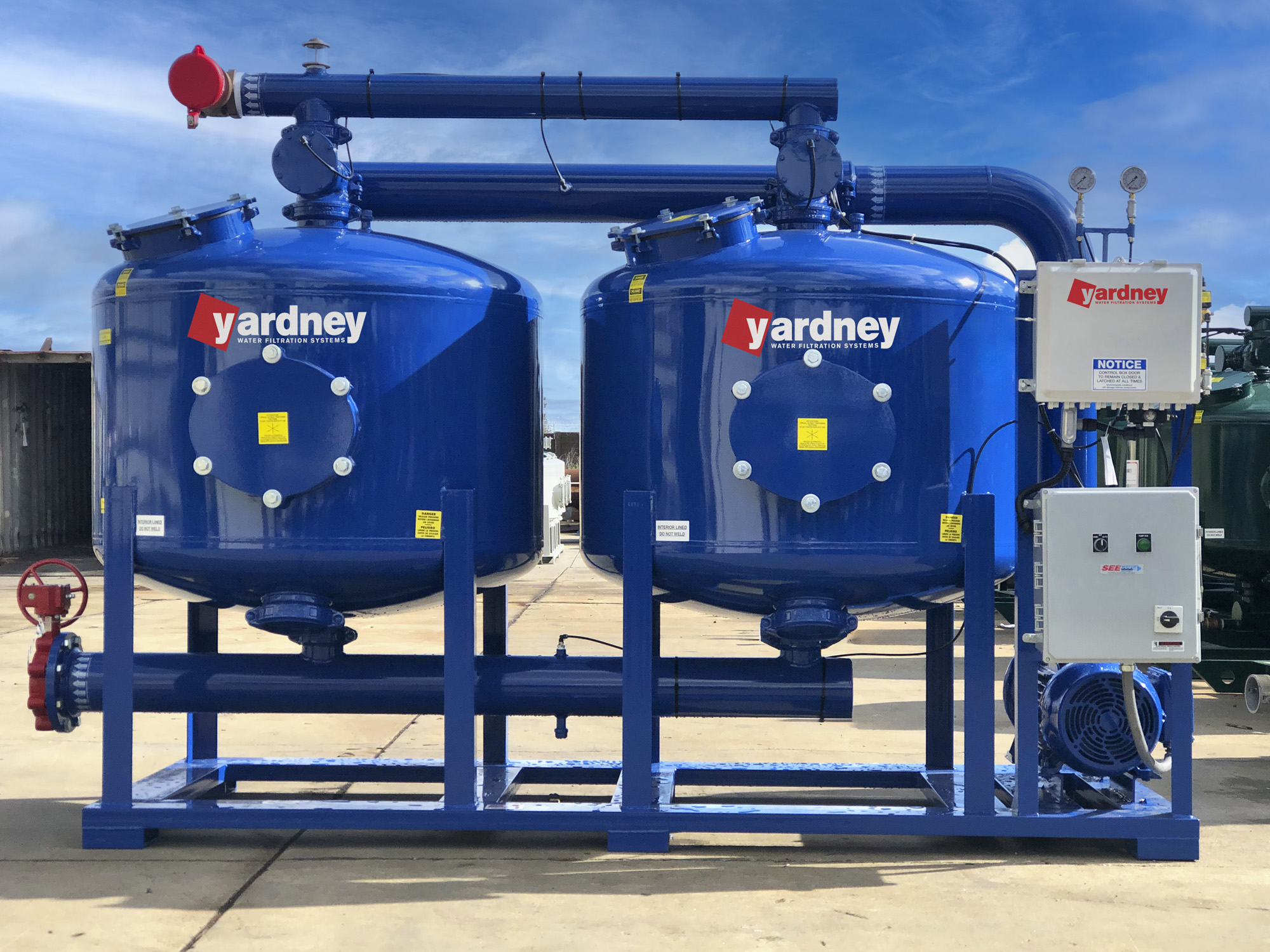
Yardney GAC systems are built on 72-inch shells and start at 5 gpm, with backwash valves, inlet, outlet, and backwash manifolds, and a removable underdrain. The standard operating pressure is 100 psi.
Yardney Free Flow systems list 1,2,3-TCP among their applications and can run GAC, IX resin, or dual media for site-specific designs. Larger municipal flows can use vessels up to 144 inches. In Free Flow GAC systems, Yardney lists typical beds at 7 to 12 feet deep with a 10 to 15 minute empty bed contact time.
Applications
Standard Assembly Includes (GAC systems)
Available Options
Carbon life, contact time, and any additional pretreatment depend on the water chemistry and TCP concentration, so each system is sized from site data.
Granular Activated Carbon: 72-inch shell; from 5 gpm; 100 psi; skid-mounted assembly
Free Flow PFAS: GAC, IX resin, or dual media; lists 1,2,3-TCP among its applications; 125 psi standard
Multi Media: organic and inorganic suspended solids down to 5 microns; automatic backwash by elapsed time or pressure differential
TCP is a contaminant that municipal treatment programs address with specialized processes, most often granular activated carbon, supported by pretreatment and consistent water quality.
California designated granular activated carbon as the best available technology for TCP because it has proven full-scale results. Other technologies such as advanced oxidation are also studied.
Filtration ahead of the carbon removes suspended solids that interfere with downstream efficiency, protects equipment, and keeps results consistent across changing source water.
GAC systems start at 5 gpm on 72-inch shells, and larger vessels reach 144 inches. Share your flow and TCP data so Yardney can size the system.
Free Flow systems can run GAC, IX resin, or a dual media design. Which fits depends on your source water, and Yardney reviews site data to recommend a layout.