Cooling towers play an essential role in maintaining efficient operations across industrial facilities, commercial buildings, manufacturing plants, and large-scale cooling systems. By removing excess heat from equipment and processes, they help regulate temperatures, protect valuable machinery, and support consistent performance. However, cooling tower efficiency depends heavily on one factor that is sometimes overlooked: water quality.
As water circulates through a cooling tower, it can accumulate sediment, suspended solids, airborne debris, minerals, and other contaminants. Over time, these impurities can contribute to fouling, scale formation, corrosion, and increased maintenance requirements. Without effective cooling tower water filtration, facilities may experience reduced heat transfer efficiency, higher energy consumption, and unnecessary equipment wear.
At Yardney Water Filtration Systems, we understand the importance of reliable water filtration in demanding industrial and commercial environments. Our advanced filtration technologies are designed to help facilities manage water quality, protect critical equipment, and improve operational reliability. By incorporating the appropriate filtration solution into a cooling tower water treatment program, businesses can reduce maintenance demands while supporting long-term system performance.
Why Water Quality Matters in Cooling Tower Operations
Cooling towers operate by transferring heat from circulating water to the surrounding atmosphere, primarily through evaporation. As a portion of the water evaporates, dissolved minerals and other substances become more concentrated in the remaining water. At the same time, open cooling towers are exposed to airborne contaminants, including dust, dirt, pollen, and organic debris.
These conditions create an environment where water quality can deteriorate without proper treatment. Suspended particles may accumulate in cooling tower basins, piping, heat exchangers, and other components. Meanwhile, concentrated dissolved minerals can contribute to scale formation, and certain water chemistry conditions can accelerate corrosion.
Poor water quality affects more than the appearance of circulating water. It can interfere with heat transfer, restrict water flow, increase pressure losses, and place additional demands on pumps and other equipment. Over time, these problems may contribute to higher operating costs and more frequent maintenance.
Effective industrial water filtration systems help address the suspended contaminants that contribute to these conditions. By removing particles before they accumulate throughout the cooling system, filtration supports cleaner circulation water and more dependable operation.
Common Cooling Tower Water Quality Problems
Several water quality challenges can affect cooling tower performance. Understanding these problems is essential when developing an effective filtration and treatment strategy.
Sediment and Suspended Solids
Sediment is one of the most common challenges in cooling tower operations. Dirt, sand, rust particles, and other suspended materials can enter through makeup water, airborne contamination, or internal system deterioration.
As these particles circulate, they may settle in low-flow areas or accumulate on equipment surfaces. This buildup can reduce water flow, contribute to clogged distribution components, and create additional cleaning requirements.
Scale Formation
Scale develops when dissolved minerals, particularly calcium salts, precipitate and form deposits on system surfaces. Because evaporation increases mineral concentrations, cooling towers can be especially susceptible to scaling when water chemistry is not properly managed.
Scale acts as an insulating layer on heat transfer surfaces, making it more difficult for equipment to release heat efficiently. Although conventional particle filtration does not remove dissolved hardness minerals, it can help control suspended material that contributes to deposits. Scale prevention also requires appropriate chemical treatment and water chemistry management.
Corrosion and Equipment Deterioration
Corrosion can damage metal surfaces throughout a cooling system, including piping, pumps, heat exchangers, and structural components. Water chemistry, dissolved oxygen, and operating conditions all influence corrosion rates.
Corrosion also creates additional suspended particles, which may circulate through the system and contribute to fouling. Removing these particles through filtration helps limit their accumulation, although corrosion control itself requires a comprehensive treatment program.
Biological Growth and Biofilm
Cooling towers can support the growth of microorganisms when conditions are favorable. Biological deposits and biofilm may develop on wetted surfaces, interfering with heat transfer and restricting water flow.
Suspended sediment can create areas where deposits accumulate and microorganisms become more difficult to control. Filtration helps reduce particulate loading, but it does not replace biocides, disinfection, cleaning, or appropriate biological monitoring.
The Centers for Disease Control and Prevention’s guidance on controlling Legionella in cooling towers emphasizes the importance of maintaining water quality, controlling sediment and biofilm, and implementing a comprehensive water management program.
How Cooling Tower Water Filtration Improves Energy Efficiency
One of the most important benefits of cooling tower filtration systems is their ability to support more efficient heat transfer. Cooling systems perform best when water can circulate freely and heat transfer surfaces remain relatively clean.
When sediment and suspended solids accumulate, they can form deposits on heat exchangers and other components. These deposits create resistance to heat transfer, forcing the cooling system to work harder to achieve the required operating temperatures. Depending on system design, this can increase energy consumption or reduce available cooling capacity.
By continuously or periodically removing suspended particles, filtration helps limit fouling and maintain more favorable operating conditions. Cleaner heat transfer surfaces allow cooling equipment to perform closer to its intended design capabilities.
The benefits extend to pumps and water distribution systems. Reducing particulate accumulation can help prevent unnecessary flow restrictions and maintain consistent water movement throughout the system.
At Yardney Water Filtration Systems, we provide filtration technologies engineered for demanding industrial applications. Our goal is to help facilities maintain water quality that supports reliable cooling performance while reducing the operational problems associated with sediment and debris.
Reducing Cooling Tower Maintenance and Equipment Wear
Cooling tower maintenance is necessary for safe and efficient operation, but excessive sediment accumulation can increase the frequency and complexity of maintenance activities.
When suspended solids settle in cooling tower basins or accumulate in equipment, maintenance teams may need to perform additional cleaning, flushing, and inspections. Significant buildup can also contribute to clogged strainers, blocked spray nozzles, and reduced water distribution efficiency.
A properly designed cooling tower water filtration system can reduce the amount of particulate material circulating through the equipment. This helps minimize sediment accumulation and may extend the intervals between certain cleaning activities, depending on water quality and operating conditions.
Filtration also helps protect mechanical components from abrasive particles. Pumps, valves, and other equipment can experience additional wear when contaminated water repeatedly passes through them.
By reducing the concentration of suspended solids, facilities can help protect their equipment investments and potentially lower maintenance-related expenses.
For businesses that depend on uninterrupted cooling, reducing unplanned maintenance can be especially valuable. Consistent water quality supports more predictable operations and allows maintenance teams to focus on preventive activities rather than recurring sediment-related problems.
The Benefits of Side-Stream Filtration for Cooling Towers
Side-stream filtration is a commonly used approach for controlling suspended solids in cooling tower systems. Rather than filtering the entire circulating water flow, a side-stream system continuously diverts a portion of the water through filtration equipment before returning it to the cooling system.
This approach allows contaminants to be removed progressively while the cooling tower remains in operation. Over time, side-stream filtration can reduce the concentration of suspended solids throughout the circulating water.
Side-stream filtration is particularly beneficial for open cooling towers exposed to airborne dust, debris, and other environmental contaminants. Facilities operating in dusty industrial environments or areas with significant particulate exposure may experience especially high sediment loads.
The U.S. Department of Energy’s Best Management Practice #10: Cooling Tower Management identifies side-stream filtration as a strategy for reducing suspended solids and supporting effective cooling tower water management.
The effectiveness of a side-stream filtration system depends on several factors, including particle size, contaminant loading, filtration efficiency, circulation rates, and the percentage of water being treated.
At Yardney Water Filtration Systems, we recognize that filtration equipment must be matched to actual operating conditions. Selecting an appropriately sized system with suitable filtration media and backwashing capabilities is essential for achieving dependable performance.
Choosing the Right Filtration Technology for Cooling Tower Applications
Not all cooling towers experience the same water quality challenges. The appropriate filtration technology depends on the contaminants present, required flow rates, operating conditions, and maintenance objectives.
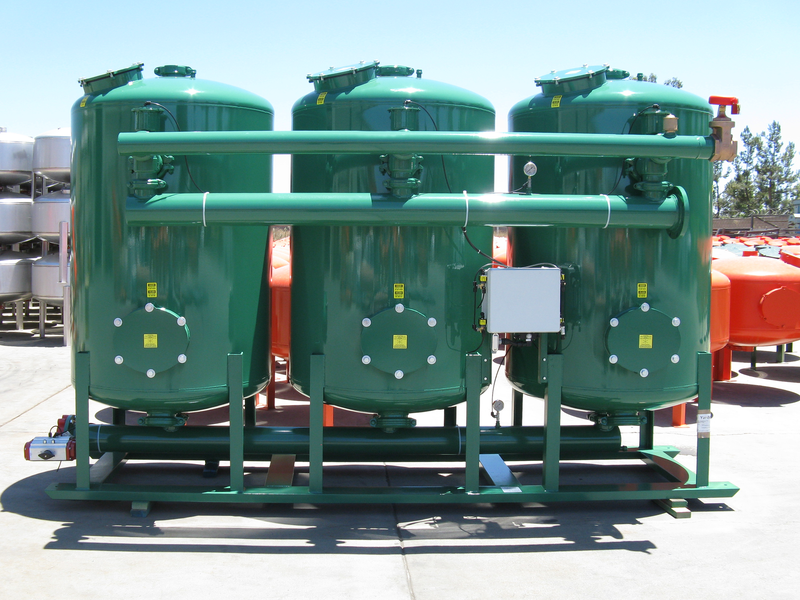
At Yardney Water Filtration Systems, we offer a comprehensive range of industrial and commercial water filtration solutions, including Sand Media, Multi-Media, and Granular Activated Carbon filtration technologies. Each offers different capabilities depending on the application.
Sand media filtration is particularly useful for removing suspended solids and particulate matter. Water passes through a bed of filtration media, where particles become trapped. This technology can be effective for cooling tower applications where sediment and debris are primary concerns.
Multi-media filtration uses layers of different filtration materials to capture particles throughout the filter bed. Depending on the configuration, this approach can provide effective particulate removal across a range of water conditions.
Granular activated carbon filtration is designed primarily for applications requiring adsorption of certain organic compounds and other treatable contaminants. Its suitability for cooling tower applications depends on specific water treatment objectives, and it is not generally the first choice for routine sediment removal.
Our industrial filtration technologies also include automatic backwashing capabilities. During backwashing, accumulated particles are flushed from the filtration media, restoring filtration performance without requiring routine manual media cleaning.
Supporting Water Conservation and Sustainable Operations
Cooling towers consume substantial amounts of water through evaporation and controlled discharge, commonly called blowdown. Blowdown removes concentrated dissolved minerals and helps maintain acceptable water chemistry.
By reducing suspended solids and particulate fouling, cooling tower water filtration can support more effective overall water management. However, filtration alone does not eliminate dissolved minerals or automatically reduce blowdown requirements.
When combined with appropriate chemical treatment, conductivity monitoring, and system controls, improved water quality may help facilities operate at more efficient cycles of concentration. This can reduce unnecessary water discharge and makeup water consumption.
The U.S. Department of Energy’s guidance on side-stream filtration for cooling towers identifies potential benefits that include lower water and energy consumption, reduced operating costs, and longer equipment service life.
For facilities pursuing sustainability initiatives, effective filtration represents an important component of responsible water management. At Yardney Water Filtration Systems, we help customers address challenging water conditions through filtration technologies designed for long-term reliability and performance.
Frequently Asked Questions About Cooling Tower Water Filtration
Cooling tower operators often have questions about filtration requirements, maintenance, and potential efficiency improvements. The following answers address several common considerations.
How Often Should Cooling Tower Water Be Filtered?
Filtration frequency depends on water quality, contaminant loading, and system design. Side-stream filtration systems commonly operate continuously while the cooling tower is running, allowing suspended solids to be removed progressively. The appropriate filtration flow rate should be determined by the system’s operating requirements.
Can Water Filtration Eliminate Cooling Tower Chemical Treatment?
No. Filtration removes suspended particles but does not replace chemical treatment for controlling dissolved mineral scaling, corrosion, or microbial growth. The most effective cooling tower water management programs combine filtration with appropriate water chemistry monitoring, treatment, and maintenance.
What Are the Signs That a Cooling Tower Needs Better Filtration?
Common indicators include excessive sediment in the cooling tower basin, frequent nozzle or strainer blockages, recurring fouling, increased cleaning requirements, and declining heat transfer performance. Water testing and equipment inspections can help determine whether suspended solids are contributing to these problems.
Can Filtration Be Added to an Existing Cooling Tower?
Yes. Many existing cooling towers can accommodate a properly engineered side-stream filtration system. The feasibility and design depend on available space, piping configurations, circulation rates, water quality, and operational requirements. Evaluating these factors helps determine the most appropriate filtration solution.
Why Partner with Yardney Water Filtration Systems
At Yardney Water Filtration Systems, we understand that reliable water quality is essential for efficient industrial and commercial operations. Our comprehensive line of advanced filtration systems is designed to address demanding water conditions while supporting equipment performance, operational reliability, and long-term maintenance objectives. Whether your facility is experiencing excessive sediment accumulation, recurring fouling, or increased cooling tower maintenance, we can help identify filtration technologies suited to your application.
Our industrial product line includes Sand Media, Multi-Media, and Granular Activated Carbon filtration systems, along with specialized media options for applications requiring targeted contaminant treatment. With filtration technology proven across hundreds of applications, we combine established engineering principles with solutions designed to meet evolving water quality requirements. We recognize that every facility has unique operating conditions, and selecting the appropriate filtration system is essential for dependable results.
Beyond industrial cooling applications, Yardney Water Filtration Systems serves commercial, municipal, agricultural, golf, turf, and landscape markets. Our experience across these industries gives us a broad understanding of water quality challenges and the importance of matching filtration technology to specific operating requirements. We are committed to providing reliable, high-performance water filtration systems that help customers protect equipment, manage maintenance costs, and support efficient water use.
If your cooling tower is experiencing sediment buildup, excessive maintenance requirements, or reduced operating efficiency, Yardney Water Filtration Systems is ready to help you explore your filtration options. Call us at 951.656.6716 or email [email protected] to discuss your water quality challenges and learn how our advanced filtration solutions can support more efficient, reliable cooling tower operations.