Water filtration is not a set-it-and-forget-it process. As a filtration system captures suspended solids, organic matter, sediment, and other contaminants, those materials accumulate within the filter. Eventually, that buildup can restrict flow, increase differential pressure, reduce filtration efficiency, and create additional maintenance requirements. For facilities that depend on consistent water quality and reliable system performance, the way a filter is cleaned can be almost as important as the way it filters.
That is where automatic backwash filtration systems provide an important operational advantage. Rather than relying entirely on manual cleaning or waiting until filtration performance noticeably declines, an automatic system can initiate a cleaning cycle according to predetermined operating conditions. The result is a filtration process designed to maintain performance while reducing the amount of routine operator intervention required.
At Yardney Water Filtration Systems, we have built our filtration technologies around the realities of demanding water applications. From municipal water treatment and industrial water treatment to agriculture, irrigation, golf, turf, landscape, and commercial systems, effective filtration requires more than removing contaminants. It requires equipment that can continue performing reliably as water conditions, flow requirements, and operational demands change.
What Is an Automatic Backwash Filtration System?
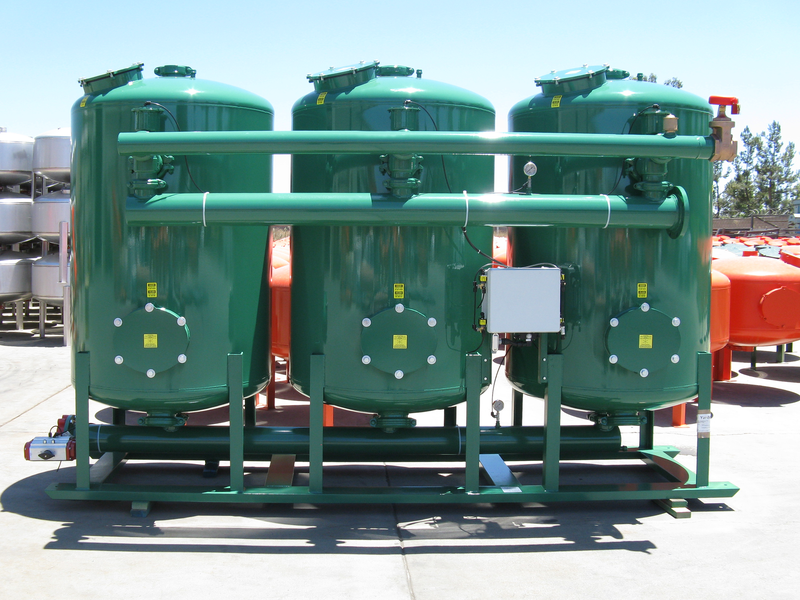
An automatic backwash filtration system is designed to clean accumulated material from a filter without requiring operators to manually disassemble or clean the filtration equipment each time solids build up. During normal filtration, water passes through the selected filtration media, where unwanted particles or contaminants are captured or treated depending on the media and application.
As material accumulates, resistance through the filter typically increases. An automated control system can use operating parameters such as differential pressure, elapsed time, or other programmed conditions to initiate a backwash cycle. During backwashing, the normal filtration flow is altered so that accumulated material can be loosened and removed from the filter bed. Once the cleaning cycle is complete, the filter returns to normal service.
The exact backwash process depends on the filtration technology, system configuration, media selection, source water, and treatment objective. A sand media filtration system removing suspended organic matter from irrigation water, for example, may have very different operating requirements from a municipal system using specialized media for a specific contaminant.
The important point is that automatic backwashing integrates cleaning into normal system operation. At Yardney Water Filtration Systems, we engineer filtration around the entire application rather than viewing the filter vessel as an isolated piece of equipment.
Why Backwashing Is Critical to Filtration Performance
Every filtration system has a finite capacity to hold accumulated material before performance begins to change. As solids collect in a filter bed, the spaces available for water to move through the media become increasingly restricted. If the filter is not cleaned appropriately, operators may experience rising pressure differential, reduced flow, inconsistent performance, or unnecessary stress on other components.
Backwashing removes accumulated material and helps restore the filter bed to effective operating condition. The process can also help redistribute filtration media and prevent excessive accumulation in localized areas. When properly engineered, the backwash cycle supports both filtration effectiveness and reliable hydraulic performance.
This is particularly important in applications where water quality can fluctuate. Surface water used for irrigation may experience changing organic loads, algae, sediment, and seasonal debris. Industrial process water may contain suspended solids that vary with production conditions. Municipal source water can also change due to weather, source conditions, upstream activity, or treatment demands. A properly designed automatic water filtration system can respond more consistently to these changing conditions.
The Operational Benefits of Automatic Backwashing
One of the most significant advantages of automatic backwashing is reduced dependence on manual filter cleaning. In a large municipal, industrial, agricultural, or commercial system, repeatedly stopping equipment for routine cleaning can require significant operator time. Automation allows the cleaning process to become part of the normal operating sequence.
That does not eliminate the need for inspection or preventive maintenance. Instead, it allows skilled operators to spend less time performing repetitive cleaning procedures and more time evaluating overall system performance. Automation also creates greater consistency because cleaning occurs according to defined operating parameters rather than depending exclusively on an operator recognizing that the filter needs attention.
Automatic backwashing can also help protect consistent water flow. Allowing excessive solids accumulation increases resistance through the filter. Cleaning the system before that buildup becomes severe helps maintain hydraulic performance and can reduce the likelihood that filtration becomes a bottleneck within the larger water system.
For Yardney Water Filtration Systems, reliability is a central design consideration. Our filtration equipment is built for applications where dependable operation matters, whether the system is protecting irrigation emitters across a large agricultural operation or supporting a municipal or industrial treatment process.
Automatic Backwashing in Municipal Water Treatment
Municipal water systems face particularly demanding filtration requirements. Water utilities must balance water quality objectives with flow requirements, operating costs, available labor, system footprint, maintenance, and increasingly complex treatment needs. Filtration equipment therefore needs to function as part of a larger treatment strategy.
Automatic backwash filtration can provide an important foundation for municipal water treatment systems by efficiently managing suspended solids and other targeted constituents while simplifying routine cleaning. Depending on the application, filtration may serve as pretreatment, a primary treatment process, or part of a larger treatment train incorporating additional technologies.
Municipal systems are also confronting a wider range of contaminants and treatment objectives, including iron, manganese, arsenic, PFAS, Chromium 6, 1,2,3-TCP, and other emerging contaminants. Treatment for these constituents is highly application-specific, and no single filtration medium should be presented as a universal solution. The U.S. Environmental Protection Agency explains that adsorptive media technologies can address contaminants such as arsenic, with effectiveness depending on factors including the particular media and water chemistry.
Yardney Water Filtration Systems offers multiple filtration technologies and media options so systems can be configured around actual water chemistry and treatment objectives. Our capabilities include Sand Media, Multi-Media, Granular Activated Carbon, Green Sand, Green Sand Plus, and specialized media selections for applications involving iron, manganese, arsenic, and other water quality challenges.
Supporting Industrial Water Treatment and Water Reuse
Industrial facilities often operate under a different set of pressures, but reliability remains just as important. Water may be needed for cooling, process applications, equipment protection, reuse, pretreatment, or other plant functions. Poor filtration can affect downstream equipment, increase maintenance demands, and interfere with process consistency.
An automatic backwash filtration system can help industrial facilities maintain more predictable filtration while limiting unnecessary manual intervention. When the filtration technology is correctly matched to the contaminant load and operating requirements, automated cleaning helps maintain the filter as part of a continuous treatment process.
This capability becomes increasingly valuable as organizations evaluate water reuse and sustainability strategies. The EPA defines water reuse as reclaiming water from various sources, treating it, and using it again for beneficial purposes. Its current Water Reuse Action Plan specifically addresses reuse opportunities across industry, agriculture, communities, and other sectors.
Filtration is frequently an important component of those treatment trains because reused water must be treated appropriately for its intended application. Yardney Water Filtration Systems can help facilities evaluate filtration as part of a broader strategy for improving water quality, protecting downstream equipment, and supporting responsible water management.
Why Automatic Backwashing Matters for Agriculture and Irrigation
In agriculture, golf, turf, and landscape applications, filtration performance directly affects the ability to deliver water where it is needed. Irrigation water drawn from ponds, canals, reservoirs, wells, and other sources can contain sediment, algae, organic debris, and other suspended material capable of interfering with system performance.
Effective irrigation filtration helps protect sprinklers, drip emitters, valves, pumps, and other downstream equipment. Automatic backwashing adds another level of operational convenience by allowing the filter to clean itself according to system conditions without requiring the irrigation operation to depend solely on manual cleaning schedules.
This is an area where Yardney Water Filtration Systems has extensive experience. Our products have continued to evolve, but the basic filtration principles behind our agricultural systems have been proven through thousands of applications. We design filtration with the grower and system operator in mind, considering acreage, water source, flow requirements, contaminant loading, and irrigation equipment when determining the appropriate solution.
The Importance of Choosing the Right Filter and Media
Automatic backwashing is valuable, but automation cannot compensate for a filtration system that is poorly matched to the application. The first step is understanding what needs to be removed, the concentration and characteristics of those contaminants, the required flow rate, pressure conditions, source-water variability, and the quality of water needed downstream.
Sand media filtration, for example, can be highly effective for applications involving suspended solids and organic material. Multi-media filtration uses carefully selected media layers to address particular filtration requirements. Granular Activated Carbon can be incorporated into treatment strategies where adsorption of certain organic compounds or other targeted contaminants is required. Specialized media may be appropriate for iron and manganese removal, arsenic treatment, or other specific water quality concerns.
At Yardney Water Filtration Systems, our goal is not simply to provide a filter that fits into an available space. We help identify the filtration approach that makes sense for the water source and application. That engineering perspective is especially important when filtration is part of a larger municipal or industrial treatment train.
Designing Backwash Systems for Long-Term Reliability
The effectiveness of automatic backwashing depends on more than having an automatic control. Flow rates, available backwash water, system pressure, valve operation, media characteristics, influent solids, filtration rates, and control settings all influence how effectively the filter can clean itself.
Backwash water management is particularly important in municipal applications. The EPA maintains specific requirements and technical guidance concerning recycling filter backwash water within certain public water treatment processes, illustrating why backwash management must be considered within the broader treatment-system design.
This system-level perspective is central to how Yardney Water Filtration Systems approaches filtration. A well-designed filtration system should deliver the required water quality while also making operation, cleaning, maintenance, and long-term performance manageable. By considering these factors during system design, we can help customers avoid treating filtration as an afterthought.
Frequently Asked Questions About Automatic Backwash Filtration Systems
Understanding how automatic backwashing works can make it easier to determine whether the technology is appropriate for a particular application. The following questions address several common considerations.
What triggers an automatic backwash cycle?
The trigger depends on the system design and controls. Backwashing may be initiated according to differential pressure, elapsed time, or programmed operating parameters. Differential-pressure-based operation can be particularly useful because it allows the system to respond to the actual accumulation of material within the filter rather than relying solely on a fixed schedule.
Does automatic backwashing eliminate filter maintenance?
No. Automatic backwashing reduces the need for routine manual cleaning, but filtration equipment still requires appropriate inspection and preventive maintenance. Valves, controls, gauges, media, piping, and other components should be monitored according to the system design and operating environment. Automation makes routine operation more efficient; it does not eliminate responsible system management.
Can automatic backwash filtration be used for municipal and industrial applications?
Yes. Automatic backwash systems can be engineered for municipal water filtration, industrial water filtration, agriculture, irrigation, golf, turf, landscape, commercial applications, and other markets. The appropriate filter, media, controls, and backwash configuration depend on source-water quality, contaminant characteristics, flow requirements, and treatment goals.
Can automatic backwashing remove PFAS or other emerging contaminants?
Backwashing itself is a cleaning process, not a universal contaminant-removal mechanism. Treatment of PFAS, arsenic, Chromium 6, 1,2,3-TCP, microplastics, iron, manganese, and other contaminants requires appropriate treatment technologies selected according to the contaminant and water chemistry. Depending on the application, filtration and backwashing may form one part of a broader treatment train using technologies such as Granular Activated Carbon or specialized media.
Why Partner with Yardney Water Filtration Systems
Choosing the right filtration equipment requires more than selecting a vessel and connecting it to a pipeline. Water sources differ, contaminant loads change, operating requirements vary, and treatment objectives can be dramatically different from one application to another. At Yardney Water Filtration Systems, we bring decades of filtration knowledge to these challenges and engineer solutions around the actual application.
Our complete line of filtration systems serves industrial, commercial, municipal, agricultural, golf, turf, landscape, and irrigation applications. Our industrial product line includes three distinctly different types of backwashing media filters utilizing Sand Media, Multi-Media, and Granular Activated Carbon, along with additional media options for specialized applications involving iron, manganese, arsenic, and other water quality concerns.
Whether the objective is improving municipal water treatment, protecting industrial processes, supporting irrigation performance, addressing challenging source water, or incorporating filtration into a water reuse strategy, we can help evaluate the conditions and identify an appropriate filtration approach. Our filtration technology has been proven across hundreds of applications and thousands of installations because we focus on practical engineering, reliability, and long-term performance.
If you are evaluating an automatic backwash filtration system or need help determining which filtration technology is appropriate for your water source and application, contact Yardney Water Filtration Systems. Call 951.656.6716 or email [email protected] to discuss your water treatment requirements with our team.