Industrial water is easy to overlook when it is doing its job. It flows through cooling systems, process equipment, heat exchangers, boilers, pumps, piping, and other critical infrastructure without attracting much attention. When water quality begins to deteriorate, however, the consequences can spread far beyond the water system itself. Poor filtration can contribute to fouling, scaling, corrosion, inconsistent process performance, increased maintenance, shortened equipment life, and costly interruptions to production.
That is why evaluating an industrial water filtration system only by its initial purchase price can be misleading. A system that is undersized, poorly matched to the source water, or incapable of addressing the contaminants present may appear economical initially while creating substantially higher operating costs over time.
At Yardney Water Filtration Systems, we approach filtration as part of the larger industrial process. Effective filtration is not simply about producing clearer water. It is about protecting equipment, maintaining predictable operations, supporting water reuse and sustainability, and helping facilities manage water quality challenges ranging from suspended solids and turbidity to iron, manganese, arsenic, PFAS, and emerging contaminants.
Inadequate Filtration Can Quietly Increase Operating Costs
One of the challenges with inadequate filtration is that the financial impact is often distributed across several areas of an operation. There may not be one dramatic filtration failure that immediately identifies the problem. Instead, maintenance crews replace components more frequently. Pumps work harder. Heat-transfer efficiency slowly declines. Cleaning cycles become more frequent. Production interruptions become more common. Chemical consumption increases. Equipment does not last as long as expected.
Individually, each expense may seem manageable. Collectively, they can create a significant hidden operating cost. Facilities may continue treating symptoms without realizing that insufficient industrial water treatment is contributing to several of those symptoms at once.
The source water also matters. Industrial facilities may rely on groundwater, surface water, municipal supplies, reclaimed water, process water, or combinations of several sources. Each can introduce different filtration challenges. The U.S. Geological Survey explains that groundwater can contain naturally occurring trace elements, including iron and arsenic, and that human activities can also contribute contaminants to water supplies.
Understanding what is actually entering the facility is therefore the starting point for selecting an appropriate water filtration system.
Equipment Damage Is One of the Most Expensive Consequences
Industrial equipment is often designed around specific water-quality expectations. When suspended solids, sediment, scale-forming materials, or other contaminants exceed those expectations, the water itself can become a source of mechanical stress.
Particles circulating through pumps, valves, nozzles, seals, heat exchangers, and other components can accelerate wear. Sediment can accumulate in areas with lower flow velocity. Deposits can narrow passages and interfere with valves or instrumentation. Irrigation and spray applications can experience clogged emitters and nozzles. Heat exchangers may lose efficiency as deposits build on heat-transfer surfaces.
The result can be a cycle of maintenance that becomes accepted as normal even though improved suspended solids removal could reduce the underlying problem.
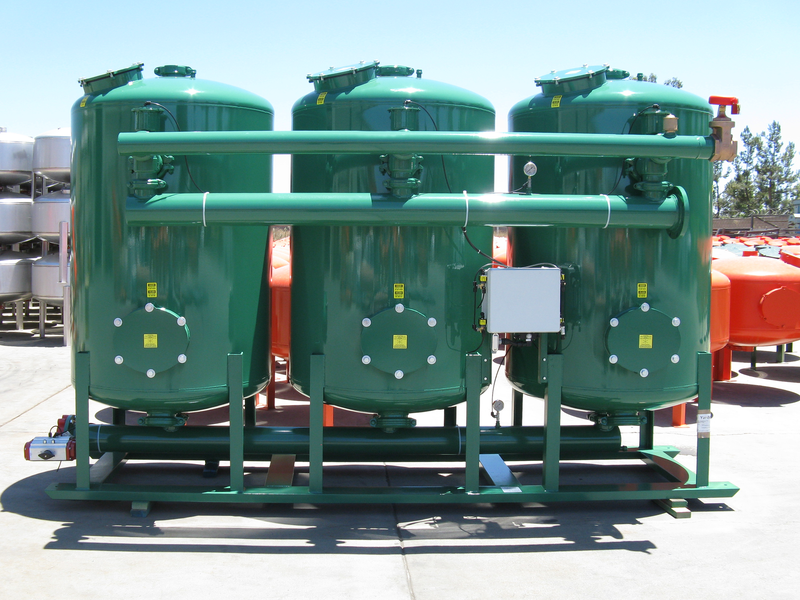
Filtration should therefore be viewed as protective infrastructure. A properly selected sand media filter, multi-media filter, automatic clean screen filter, or other filtration technology can help keep contaminants from reaching sensitive downstream equipment. Protecting a major pump, heat exchanger, cooling system, or production line can produce value that extends far beyond the filtration equipment itself.
Poor Water Quality Can Reduce Process Efficiency
Filtration problems do not always cause equipment to stop working. Sometimes they simply cause it to work less efficiently.
Consider heat-transfer equipment. Deposits on surfaces can interfere with the efficient movement of heat. Pumps may experience increased resistance when piping becomes restricted. Nozzles may deliver inconsistent flow when partially obstructed. Water treatment processes downstream may require additional chemicals or more frequent maintenance because the incoming contaminant load is higher than anticipated.
Those incremental efficiency losses matter in industrial environments where equipment may operate for thousands of hours every year. Even a relatively small decline in performance can translate into additional energy use, labor, chemicals, water consumption, and operating expense.
This is one reason industrial water filtration should be evaluated as part of the complete process rather than as an isolated component. The right filtration strategy considers flow rates, contaminant loading, particle size, water chemistry, downstream equipment requirements, operating conditions, and the facility’s long-term objectives.
Downtime Can Cost Far More Than the Filtration System
For many industrial operations, unplanned downtime is among the most expensive consequences of poor water quality.
A clogged nozzle might appear to be a minor maintenance issue. If that nozzle is essential to a manufacturing process, however, the actual cost can include interrupted production, maintenance labor, replacement parts, missed schedules, wasted materials, and delayed shipments.
The same principle applies to cooling systems, pumps, heat exchangers, and other water-dependent equipment. Contamination that repeatedly interferes with these systems can make maintenance increasingly reactive.
Effective industrial water treatment systems help facilities shift away from that pattern. Instead of waiting for contaminants to accumulate downstream, filtration removes or manages them earlier in the process.
That distinction is important. Preventive filtration may represent a planned operating expense. Emergency repairs and unexpected shutdowns represent unpredictable business risk.
Suspended Solids Can Create Problems Throughout the System
Suspended solids are among the most common industrial filtration challenges. Sand, silt, organic material, rust particles, process debris, and other solids can enter water from source supplies or be introduced during industrial operations.
Depending on the application and contaminant characteristics, sand media filtration, multi-media filtration, centrifugal separation, screen filtration, or combinations of technologies may be appropriate.
A sand media filter can be particularly useful when water contains organic material and suspended solids that need to be captured throughout a media bed. Multi-media filtration can use layers of different media to provide depth filtration for specific water-quality objectives. Screen filtration can be useful for removing particles according to defined screen openings, while a centrifugal sand separator can address heavier solids in applications where centrifugal separation is appropriate.
The important point is that these technologies are not interchangeable simply because they all “filter water.” The contaminant profile and application should determine the technology rather than choosing equipment first and attempting to make the water fit the system.
Iron, Manganese, and Arsenic Require More Than a One-Size-Fits-All Approach
Not every industrial water problem is visible as suspended sediment. Dissolved contaminants can create equally significant challenges.
Iron and manganese removal is a good example. These naturally occurring constituents can create staining, deposits, discoloration, and operational difficulties depending on their concentration and chemistry. The U.S. Geological Survey notes that manganese and arsenic can occur at elevated concentrations in groundwater and that groundwater chemistry plays an important role in the presence of these geogenic contaminants.
Arsenic removal presents another specialized water-treatment challenge. Arsenic behavior depends on factors including water chemistry and the form of arsenic present, meaning that effective treatment requires more than simply adding a generic filter.
These conditions reinforce the importance of water testing and application-specific engineering. Media options such as Green Sand, Green Sand Plus, and other specialized filtration media can be incorporated when appropriate for specific contaminant challenges.
A properly engineered treatment system begins with understanding the water rather than assuming that every contaminant behaves the same way.
Emerging Contaminants Are Expanding the Filtration Conversation
Industrial and municipal water operators are also paying greater attention to contaminants that historically received less scrutiny. These include PFAS, Chromium-6, 1,2,3-TCP, microplastics, and other emerging contaminants.
These contaminants are particularly important because conventional filtration technologies designed for suspended solids are not necessarily designed to remove dissolved chemical compounds. Treatment strategies must therefore be selected around the contaminant being targeted.
For example, granular activated carbon filtration, commonly called GAC filtration, can be used for certain organic contaminants and water-quality applications. Other contaminants may require ion exchange, specialized media, membrane treatment, or combinations of technologies.
The growing focus on PFAS remediation and emerging contaminants also demonstrates why facilities should periodically reevaluate their treatment systems. A filtration system that was appropriate for a facility’s original objectives may not address today’s water-quality requirements or tomorrow’s operational goals.
Inadequate Filtration Can Undermine Water Reuse Goals
Water availability, sustainability initiatives, discharge costs, and operational resilience are encouraging more industrial facilities to investigate water reuse and recycling. However, reuse increases the importance of controlling water quality.
The U.S. Environmental Protection Agency explains that industrial water reuse can include water generated from cooling, boiler operations, manufacturing, oil and gas production, and other onsite processes. Depending on the intended reuse, treatment can allow that water to serve another beneficial purpose within the facility.
Filtration can play an important role in making these strategies practical. Removing suspended solids and other targeted contaminants can help prepare water for additional treatment or reuse while protecting downstream processes.
Poor filtration, by comparison, can make reuse more difficult. Contaminants that are allowed to accumulate can increase treatment requirements and reduce the number of applications for which the water is suitable.
For facilities pursuing sustainable industrial water management, filtration should therefore be considered part of the water-reuse strategy from the beginning rather than an afterthought.
Maintenance Costs Tell Only Part of the Story
Maintenance records can reveal valuable clues about filtration performance. Frequent nozzle cleaning, recurring pump problems, excessive backwashing, repeated heat-exchanger cleaning, clogged screens, unusual pressure changes, and premature component replacement can all justify a closer look at water quality.
However, direct maintenance expense is only one part of the cost.
Facilities should also consider labor hours, replacement components, energy consumption, chemical usage, production losses, water consumption, wastewater disposal, lost efficiency, and the opportunity cost associated with personnel repeatedly addressing preventable water-quality problems.
When these expenses are considered together, investing in a properly engineered commercial or industrial water filter can look very different financially than it does when filtration is evaluated solely as a capital purchase.
The lowest-cost system is not necessarily the lowest-cost solution.
The Wrong Filtration Technology Can Be Almost as Costly as No Filtration
Installing a filter does not automatically solve a water-quality problem. A filtration system has to match the application.
A screen filter designed to capture larger suspended particles will not necessarily solve a dissolved contaminant problem. A treatment system designed for iron and manganese may not address PFAS. A filtration system sized for average conditions may struggle when contaminant loading or flow rates fluctuate significantly.
Selecting the right technology begins with several questions: What is in the water? What particle sizes are present? Are contaminants suspended or dissolved? What flow rate must be treated? What water quality does the downstream process require? How variable is the source water? What maintenance resources are available? Is the water eventually discharged, reused, or supplied to another process?
Automatic Backwashing Can Reduce the Maintenance Burden
Filter performance also depends on what happens after contaminants have been captured.
As filtration media collects material, resistance increases. If that accumulated material is not removed effectively, flow and filtration performance can suffer. Backwashing restores the media bed by removing trapped contaminants so the system can continue operating effectively.
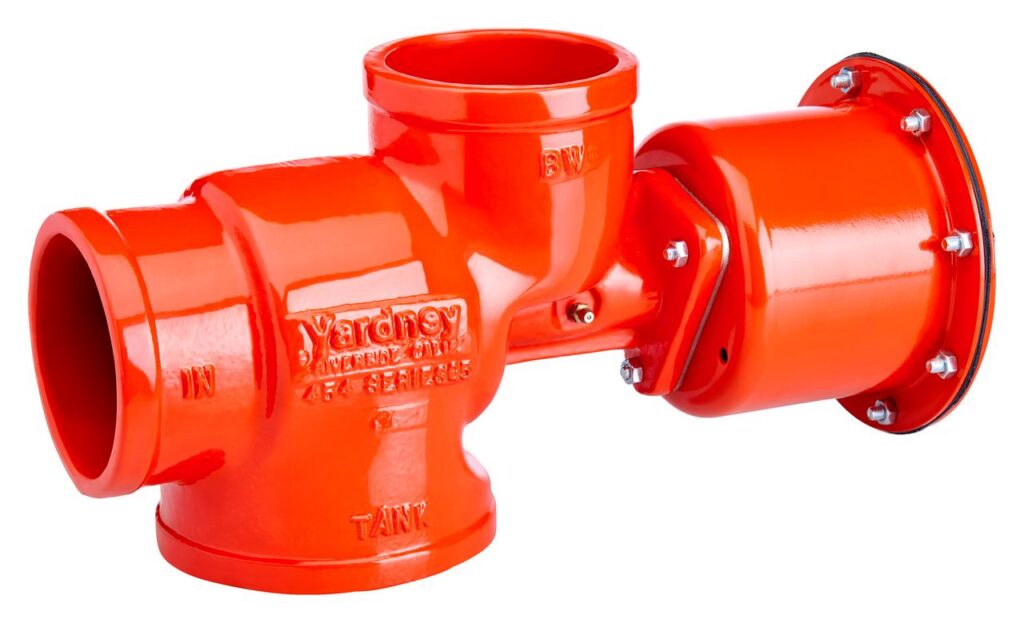
An automatic backwash valve can reduce the amount of manual intervention required while helping maintain more consistent system performance. For industrial facilities with substantial flow rates or continuous operations, automation can be particularly valuable because it allows filtration to become part of a controlled process rather than another recurring manual maintenance task.
Yardney Water Filtration Systems offers three distinctly different types of backwashing media filtration technologies: Sand Media, Multi-Media, and Granular Activated Carbon. Additional media selections are available for specialized applications involving iron, manganese, arsenic, organic clay, zeolites, Green Sand, and Green Sand Plus.
The goal is not to use the most complicated filtration system possible. It is to engineer the appropriate system for the actual water and operating conditions.
Filtration Should Be Evaluated by Lifecycle Value
Industrial filtration decisions are often made during construction, expansion, equipment replacement, or when an immediate water-quality problem appears. In each case, lifecycle cost deserves greater attention than purchase price alone.
A filtration system that costs less initially but requires constant maintenance, consumes excessive water during cleaning, fails to protect equipment, or cannot adapt to changing water quality may ultimately be more expensive than a system designed around the facility’s actual requirements.
Lifecycle value can include longer equipment life, fewer interruptions, more consistent water quality, reduced maintenance labor, better process reliability, improved reuse opportunities, and greater flexibility as water-quality requirements change.
That makes filtration a strategic infrastructure decision rather than simply another piece of equipment.
Frequently Asked Questions About Industrial Water Filtration
Every industrial facility has different water sources, processes, contaminant profiles, and performance requirements. These frequently asked questions address several of the most important considerations when evaluating industrial water filtration systems.
What are the signs that an industrial filtration system is inadequate?
Common indicators include increasing pressure differential, recurring clogged nozzles, sediment accumulation, frequent equipment cleaning, reduced flow, excessive filter maintenance, staining, declining heat-transfer performance, premature pump or valve wear, and inconsistent downstream water quality.
Facilities should look for patterns rather than isolated incidents. When multiple pieces of equipment experience water-related maintenance problems, the filtration system and source-water quality deserve closer evaluation.
How do I know which type of industrial water filter I need?
The correct filter depends on the source water, contaminants, particle characteristics, flow requirements, downstream process, and desired water quality.
Suspended solids may be addressed through sand media filters, multi-media filters, screen filters, or centrifugal separation depending on their characteristics. Dissolved contaminants may require GAC, ion exchange, specialized media, or other treatment technologies. Water testing and an application review should occur before equipment is selected.
Can industrial filtration help support water reuse?
Yes. Filtration can be an important part of an industrial reuse treatment train because it can remove suspended solids and targeted contaminants before water is reused or receives additional treatment.
The exact treatment required depends on where the reused water will go. Cooling, process water, irrigation, and other applications can have very different water-quality requirements, so the reuse objective should be established before designing the filtration system.
How often should an industrial filtration system be reevaluated?
A system should be reviewed whenever the source water changes, production expands, flow requirements increase, downstream equipment changes, maintenance problems become more frequent, reuse objectives are introduced, or new contaminants become a concern.
Periodic testing is also important because water quality is not necessarily static. Changes in wells, surface-water conditions, process streams, reclaimed-water supplies, or operating practices can alter the contaminant profile over time.
Why Partner with Water Filtration Systems
The real cost of inadequate filtration is rarely limited to the filter itself. It can appear throughout an operation as equipment wear, inefficient heat transfer, increased maintenance, production interruptions, wasted water, additional treatment requirements, and missed opportunities for water reuse. Addressing the source of those problems begins with understanding the water and selecting filtration technology that fits the application.
Yardney Water Filtration Systems offers a complete line of industrial and commercial water filtration systems engineered for varied and demanding water-quality conditions. Our industrial product line includes Sand Media, Multi-Media, and Granular Activated Carbon backwashing filtration technologies, along with additional media options for specialized applications involving iron, manganese, arsenic, organic clay, zeolites, Green Sand, and Green Sand Plus.
Our experience also extends beyond industrial and commercial facilities. We provide filtration solutions for agriculture, irrigation, golf, turf and landscape applications, with technologies that have been tested across hundreds of applications and thousands of installations. Whether the objective is protecting industrial equipment, improving process water, supporting reuse, addressing challenging contaminants, or maintaining dependable irrigation performance, we can help identify a filtration approach suited to the application.
Do not wait until poor water quality becomes an expensive equipment or production problem. To discuss your application and determine which filtration technology may be appropriate, call 951.656.6716 or email [email protected]. A well-designed filtration system is not simply an investment in cleaner water. It is an investment in reliability, efficiency, equipment protection, and long-term operational performance.