Water quality challenges are becoming increasingly complex as communities, industries, and agricultural operations rely on diverse water sources that often contain naturally occurring minerals as well as man-made contaminants. While discussions about PFAS remediation and other emerging contaminants continue to dominate headlines, many facilities still struggle with long-standing water quality issues caused by arsenic, iron, and manganese. These contaminants may occur naturally, but their impact on water quality, infrastructure, equipment, regulatory compliance, and public confidence can be significant.
For municipalities, manufacturers, growers, golf courses, commercial facilities, and landscape irrigation systems, removing these contaminants requires more than basic treatment. It demands properly engineered water filtration systems designed for the specific chemistry of the water source. Yardney Water Filtration Systems develops advanced filtration solutions that help customers meet demanding water quality objectives while improving reliability, operational efficiency, and long-term performance.
Understanding Why Arsenic, Iron, and Manganese Matter
Although these three contaminants are often discussed together, they behave differently in water and present unique treatment challenges. Understanding those differences is essential when selecting the proper filtration technology.
Arsenic is primarily a health concern. Even at relatively low concentrations, prolonged exposure may pose serious health risks. Iron and manganese, on the other hand, are generally associated with operational problems, aesthetic issues, staining, scaling, unpleasant taste, and equipment fouling. However, excessive levels can also affect water quality standards and create expensive maintenance problems across municipal, industrial, and agricultural systems.
Many groundwater sources contain one or more of these contaminants naturally because water travels through mineral-rich soils and rock formations before reaching wells or aquifers. In some regions, industrial activities may also contribute additional contamination concerns. The result is water that often requires specialized treatment before it can be safely distributed or effectively used.
According to the U.S. Environmental Protection Agency (EPA), arsenic in drinking water is regulated because of its long-term health effects, while iron and manganese are monitored because they affect water quality, infrastructure, and consumer acceptance.
Why Arsenic Presents Unique Water Treatment Challenges
Arsenic is one of the most closely monitored contaminants in modern water treatment because it can exist in multiple chemical forms that respond differently to treatment technologies.
Arsenic typically appears as either arsenite (As III) or arsenate (As V). These forms behave differently during treatment, making proper water chemistry evaluation an important first step before selecting a filtration solution. In many systems, oxidation is required before filtration can effectively remove dissolved arsenic.
This is especially important for municipal water treatment, where treatment systems must consistently meet regulatory requirements despite seasonal fluctuations in source water quality. Municipal operators need solutions that remain reliable while minimizing operational complexity and maintenance demands.
Industrial facilities face similar concerns. Manufacturers frequently depend on consistent water quality to protect equipment, maintain product quality, and reduce downtime. Elevated arsenic levels may interfere with industrial processes while increasing compliance responsibilities for discharged or reused water.
Advanced water filtration systems often combine oxidation, specialty filtration media, adsorption technologies, or ion exchange depending on site-specific water chemistry and treatment objectives.
Iron Removal Protects Infrastructure and Equipment
Iron is among the most common naturally occurring groundwater contaminants throughout North America. While iron is not generally considered a significant health concern at typical concentrations, it can create widespread operational problems throughout an entire water distribution system.
Even moderate iron concentrations frequently produce:
- Reddish-brown staining
- Pipe buildup
- Reduced flow capacity
- Clogged irrigation emitters
- Pump wear
- Fouled valves
- Increased maintenance costs
- Customer complaints regarding taste and appearance
Agricultural irrigation systems are particularly vulnerable. Iron deposits can gradually clog drip emitters, sprinkler heads, and micro-irrigation equipment, reducing irrigation efficiency while increasing labor requirements.
Golf courses and landscape irrigation systems face similar issues. Uneven irrigation caused by iron buildup can lead to inconsistent turf health, increased water consumption, and costly repairs.
Fortunately, properly designed sand media filtration, oxidation systems, and specialized iron removal media can effectively remove oxidized iron before it damages downstream equipment.
Manganese Often Creates Hidden Problems
Manganese frequently accompanies iron in groundwater, yet it often receives less attention until operational problems become severe.
Unlike iron, manganese commonly produces black staining instead of reddish discoloration. It can also create dark deposits inside pipes, pumps, filtration equipment, cooling towers, and irrigation systems.
Many industries discover manganese only after repeated equipment failures or unexplained maintenance issues. Over time, accumulated deposits reduce system efficiency while increasing operating expenses.
For municipal utilities, manganese has become an increasing focus because consumers notice discoloration, staining, and taste changes quickly. Maintaining public confidence requires consistent removal before treated water enters the distribution system.
Specialized oxidation methods combined with properly selected media filtration allow facilities to effectively address manganese while maintaining consistent treatment performance.
Why Contaminants Rarely Occur Alone
Modern water treatment rarely involves removing only one contaminant.
Many groundwater supplies simultaneously contain:
- Iron and manganese
- Arsenic
- Hardness minerals
- Suspended solids
- Organic material
- Hydrogen sulfide
- Naturally occurring minerals
- Additional emerging contaminants
Each contaminant influences treatment performance differently. One filtration technology may perform exceptionally well for suspended solids but provide limited arsenic removal. Another may remove arsenic effectively while requiring pretreatment for iron or manganese.
That is why successful treatment begins with comprehensive water analysis rather than selecting equipment based solely on contaminant concentration.
Proper engineering evaluates:
- Water chemistry
- Oxidation requirements
- Flow rates
- Seasonal variation
- Future capacity needs
- Maintenance goals
- Regulatory requirements
The result is a treatment system specifically designed for long-term performance rather than temporary improvements.
Municipal Water Treatment Continues to Evolve
Municipal water systems face growing pressure to remove traditional contaminants while preparing for new regulatory requirements involving emerging contaminants.
Communities increasingly expect treatment systems capable of addressing multiple water quality concerns simultaneously without dramatically increasing operating costs.
In addition to arsenic, iron, and manganese, utilities now evaluate treatment strategies for contaminants including:
- Chromium-6
- 1,2,3-TCP
- PFAS
- Microplastics
- Other trace organic compounds
As regulations continue evolving, flexible treatment infrastructure becomes increasingly valuable. Systems capable of incorporating additional media or adapting to changing treatment objectives provide long-term operational advantages.
The American Water Works Association (AWWA) regularly publishes technical guidance regarding treatment technologies, water quality management, and regulatory developments.
Industrial Water Treatment Requires Reliability
Industrial facilities cannot afford inconsistent water quality.
Manufacturing operations depend upon water for:
- Production processes
- Cooling systems
- Boilers
- Heat exchangers
- Cleaning operations
- Food processing
- Product formulation
Iron fouling, manganese deposits, or elevated arsenic concentrations can interrupt production schedules while increasing maintenance costs and reducing equipment life.
Advanced industrial water treatment focuses on preventing these problems before they affect operations.
Backwashing media filters, multi media filters, granular activated carbon filter systems, ion exchange, and specialty filtration media each play important roles depending upon process requirements and source water characteristics.
Reliable treatment also supports sustainability initiatives by allowing facilities to increase water reuse and sustainability while protecting valuable production assets.
Agriculture, Golf, Turf, and Landscape Operations Depend on Clean Water
Water quality directly influences irrigation performance.
Growers understand that clogged emitters, restricted nozzles, and uneven water distribution reduce crop productivity while increasing operating expenses. Even small amounts of iron accumulation may significantly reduce irrigation efficiency over time.
Golf courses and commercial landscapes face similar challenges.
Iron deposits stain hardscape features while reducing irrigation uniformity. Manganese buildup contributes additional maintenance concerns, particularly within sprinkler systems and filtration equipment.
Agriculture water filter, irrigation water filter, golf water filter, turf water filter, and landscape water filter systems must therefore deliver consistent performance while handling varying source water conditions.
The engineering philosophy behind Yardney Water Filtration Systems has always emphasized durable designs tested across thousands of real-world applications. Properly engineered filtration improves irrigation reliability while extending equipment life and reducing maintenance demands.
Choosing the Right Filtration Technology
No single filtration technology solves every water quality problem.
Successful treatment often combines multiple technologies designed specifically for individual applications.
Common treatment options include:
Sand Media Filtration
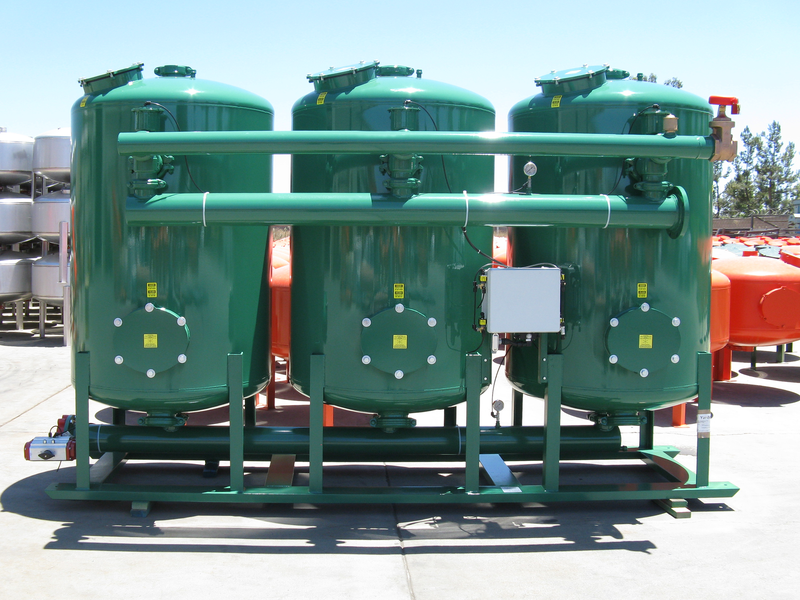
Sand media filtration effectively removes suspended solids and oxidized contaminants while protecting downstream equipment. These systems remain popular across municipal water treatment, agriculture, and industrial facilities because of their reliability and high flow capacity.
Multi Media Filters
Using multiple media layers improves filtration efficiency across varying particle sizes while increasing dirt-holding capacity and extending filtration cycles.
Granular Activated Carbon Filter (GAC)
A granular activated carbon filter provides exceptional adsorption capabilities for numerous organic compounds while playing an important role in PFAS remediation and other emerging contaminants treatment strategies.
Specialty Media
Certain applications require specialized media for iron and manganese removal, arsenic adsorption, or other challenging contaminants. Green Sand, Green Sand Plus, zeolites, organic clay, and other engineered media allow treatment systems to address unique water chemistry conditions.
Ion Exchange
Ion exchange technology offers another effective solution for selected contaminants depending upon water chemistry and treatment objectives.
Selecting among these technologies requires careful engineering rather than relying upon generalized treatment recommendations.
Emerging Contaminants Continue Expanding Treatment Priorities
Although arsenic, iron, and manganese remain important treatment priorities, water professionals are increasingly addressing newer contaminants as scientific understanding continues to evolve.
Facilities now evaluate treatment options for:
- PFAS remediation
- Chromium-6
- 1,2,3-TCP
- Microplastics
- Pharmaceutical residues
- Industrial compounds
These contaminants often require entirely different treatment approaches than traditional filtration.
For example, granular activated carbon filter systems have become widely recognized for their role in addressing certain PFAS compounds, while other contaminants may require advanced oxidation, membrane technologies, or specialized adsorption media.
According to the U.S. Geological Survey (USGS), naturally occurring contaminants and human activities both influence groundwater quality, making ongoing monitoring and appropriate treatment increasingly important.
Why Customized Engineering Produces Better Long-Term Results
Every water source is different.
Even neighboring wells may produce dramatically different water chemistry, requiring entirely different treatment strategies.
This is why successful filtration begins with engineering rather than equipment selection.
Proper design considers:
- Source water analysis
- Desired water quality
- Flow requirements
- Backwash requirements
- Space limitations
- Future expansion
- Energy efficiency
- Operational simplicity
Rather than forcing one technology into every application, customized engineering allows facilities to receive systems specifically designed for long-term performance.
At Yardney Water Filtration Systems, we develop filtration solutions that address unique water quality challenges across municipal, commercial, industrial, agricultural, golf, turf, and landscape applications. Our broad portfolio allows us to recommend technologies that fit actual operating conditions instead of one-size-fits-all solutions.
Frequently Asked Questions
Water quality treatment often raises important questions because contaminant behavior varies significantly depending on water chemistry and system design. The following answers address several common concerns regarding arsenic, iron, and manganese removal.
Can one filtration system remove arsenic, iron, and manganese simultaneously?
Sometimes, but not always. Treatment depends on the chemical form and concentration of each contaminant. Many systems combine oxidation, specialty media, sand media filtration, adsorption, or ion exchange to achieve comprehensive treatment.
Why is iron considered a problem if it is naturally occurring?
Although naturally occurring, iron causes staining, pipe buildup, clogged irrigation equipment, equipment fouling, and higher maintenance costs. Removing iron helps protect infrastructure while improving overall water quality.
What industries benefit most from iron and manganese removal?
Nearly every industry using groundwater benefits from treatment, including municipal water treatment, manufacturing, agriculture, food processing, golf courses, commercial facilities, and landscape irrigation. Cleaner water improves equipment reliability while reducing maintenance expenses.
Can filtration systems also help address emerging contaminants?
Yes. Depending on the contaminant, properly engineered treatment systems incorporating technologies such as granular activated carbon filter (GAC), specialty adsorption media, or additional treatment processes may effectively reduce contaminants including PFAS, Chromium-6, 1,2,3-TCP, and certain other emerging compounds.
Why Partner with Yardney Water Filtration Systems
Water quality challenges continue to evolve, but reliable engineering and proven filtration technologies remain the foundation of successful treatment. Yardney Water Filtration Systems offers a complete line of industrial and commercial filtration solutions designed to meet demanding water quality requirements across municipal, industrial, agricultural, golf, turf, and landscape applications. Our technologies include Sand Media, Multi-Media, and Granular Activated Carbon filtration systems, along with specialty media options including Green Sand, Green Sand Plus, zeolites, organic clay, and media specifically designed for iron, manganese, and arsenic removal.
We understand that every application is different. That is why we work closely with customers to evaluate water chemistry, operational requirements, and long-term performance goals before recommending a filtration solution. Whether your objective is improving industrial water treatment, expanding municipal water treatment, supporting water reuse and sustainability, enhancing irrigation filtration, or preparing for future emerging contaminants, we can help identify the most effective solution for your facility.
Our filtration technologies have been tested across thousands of applications and continue to deliver dependable performance in some of the most demanding environments. From growers managing large agricultural operations to municipalities serving growing communities, our commitment remains the same: delivering advanced water filtration systems built for reliability, efficiency, and long-term value.
To learn more about how Yardney Water Filtration Systems can help address arsenic, iron, manganese, PFAS, and other water quality challenges, call 951.656.6716 or email [email protected]. We look forward to helping you design a filtration solution that supports cleaner water, more reliable operations, and long-term success.