A filtration system is designed to create a dependable barrier between contaminants in a water source and the water needed downstream. Whether that water is supplying a municipal treatment process, an industrial facility, an irrigation system, a golf course, or a water reuse application, consistent filtration matters. When particles or targeted contaminants begin appearing in filtered water earlier than expected, operators may be dealing with filter breakthrough.
Breakthrough does not always mean that the filtration technology itself has failed. It can develop when a filter remains in service too long, hydraulic loading exceeds design conditions, the media bed is not cleaned properly, source-water conditions change, or the filter media and supporting components are no longer performing as intended. In some situations, actual filtration media can also migrate or be lost from the system.
At Yardney Water Filtration Systems, we approach these problems by looking at the entire filtration process. The media type, media depth, flow rate, contaminant loading, backwash operation, underdrain design, source-water characteristics, and downstream treatment goals all affect performance. Understanding why breakthrough occurs is the first step toward preventing it.
What Does Filter Media Breakthrough Mean?
In granular filtration, filter breakthrough generally describes a condition in which particles that should be retained by the filter begin passing through in greater quantities. As contaminants accumulate throughout the media bed during a filter run, the filter eventually approaches its effective solids-holding capacity. If operation continues beyond that point, effluent quality can begin to deteriorate.
The U.S. Environmental Protection Agency explains that breakthrough can occur toward the end of a filter run as accumulated particles reduce the filter’s removal ability. EPA guidance also notes that filtration problems can result from excessive filter run times, hydraulic loading beyond design limits, inadequate backwashing, media problems, and underdrain issues.
It is also important to distinguish contaminant breakthrough from physical filter media loss or migration. If sand, anthracite, carbon, support gravel, or another media material is leaving its intended position, the problem may involve excessive backwash rates, improper hydraulic distribution, damage to the underdrain, or disruption of the media bed. These are different problems, although both can ultimately compromise water filtration system performance.
Filters Can Become Overloaded During a Run
Every filter has a practical limit to how much material it can retain before cleaning is necessary. In a Sand Media Filter or Multi-Media Filter, suspended material becomes trapped throughout the media bed. As that material accumulates, resistance to flow generally increases and the condition of the bed changes.
Operating too long can eventually allow increasing numbers of particles to pass through the bed. EPA guidance describes this end-of-run breakthrough as an indication that a filter should have been taken offline and backwashed earlier.
This is why filtration should not simply be treated as equipment that can operate indefinitely until a noticeable problem occurs. Differential pressure, effluent quality, particle loading, operating time, and other system-specific performance indicators can help determine when backwashing is required.
At Yardney Water Filtration Systems, we engineer backwashing media filtration systems around actual operating requirements. Proper system sizing gives the media enough capacity to handle the anticipated contaminant load while supporting effective cleaning cycles and dependable water quality.
Hydraulic Loading Can Push a Filter Beyond Its Design
Water must move through a media filter at an appropriate rate. When flow exceeds the filter’s intended hydraulic loading, contaminants may not be captured as effectively. Sudden flow changes can be particularly problematic because they can disturb material already retained within the bed.
For example, changes in pump operation, control valves, system demand, or the number of filters operating simultaneously can alter the flow reaching individual vessels. In a treatment facility with several filters, taking one unit offline without properly managing the remaining flow can increase loading on the filters still operating.
EPA guidance identifies hydraulic loading beyond a filter’s design limits and hydraulic surges as potential causes of turbidity spikes and degraded filter performance. (US EPA)
Preventing this type of filter breakthrough begins during system design. Required flow, peak demand, available pressure, number and size of vessels, source-water characteristics, and expected contaminant loading should all be considered together. Yardney Water Filtration Systems evaluates filtration as part of the larger hydraulic system so that the equipment is designed for the conditions it will actually experience.
Backwashing Must Clean the Bed Without Damaging It
Backwashing is one of the most important processes in maintaining media filtration performance. During normal filtration, contaminants accumulate within the media. Backwashing reverses or redirects flow through the filter to expand and clean the bed, releasing accumulated material so that it can be removed from the system.
Too little backwash can leave material behind. Over time, inadequate cleaning may contribute to clogging, uneven flow paths, mudball formation, shorter filter runs, and declining performance. If sections of the bed remain dirty while water repeatedly follows easier paths through cleaner areas, effective use of the media bed can be reduced.
Too much backwash can create a different problem. Excessive backwash rates can result in filter media loss and disruption of support gravel. Uneven backwash-water distribution and incorrect backwash sequencing can also contribute to media loss.
The objective, therefore, is not simply to use as much backwash flow as possible. The backwash process needs to provide sufficient bed expansion and cleaning while keeping the filtration media where it belongs.
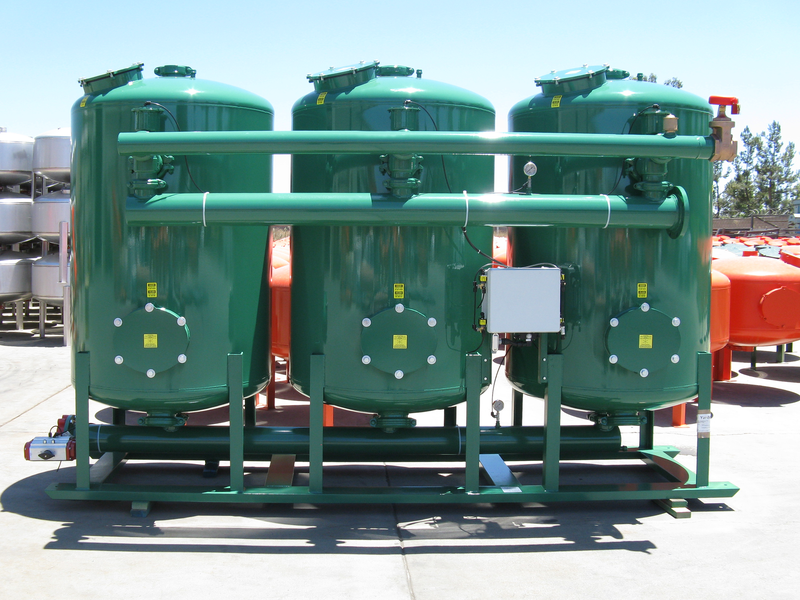
Yardney Water Filtration Systems incorporates automatic backwashing into many of our industrial filtration solutions. Our industrial Sand Media systems, for example, use a hydraulically balanced stainless-steel wedgewire underdrain designed to increase backwash effectiveness while supporting reliable operation.
Media Bed Condition and Underdrain Performance Matter
The media itself is only one part of a properly functioning filtration vessel. Beneath the bed, the filter underdrain system helps collect filtered water during normal operation and distribute water during backwashing. Poor distribution can create uneven conditions across the bed.
If the underdrain is damaged, improperly configured, or otherwise unable to distribute flow correctly, sections of the media bed may receive substantially different hydraulic forces. The result can include uneven cleaning, media disturbance, support-gravel migration, or other problems that reduce filtration effectiveness.
Yardney Water Filtration Systems designs filtration equipment as a complete system rather than treating media as an isolated component. Vessel configuration, inlet distribution, media selection, media depth, support structure, underdrain design, valves, controls, flow requirements, and backwashing all need to work together.
Source-Water Changes Can Alter Filter Performance
A filtration system designed around one set of water conditions may perform differently if those conditions change substantially. Seasonal algae, storm runoff, changing turbidity, increased suspended solids, process changes, recycled water, or a different source-water blend can increase the burden placed on a filter.
This is particularly important for municipal water treatment, industrial process water, agricultural irrigation, and water reuse applications because source conditions may not remain constant throughout the year. A filter that previously operated for a predictable period between backwashes may require more frequent cleaning when solids loading increases.
The answer is not necessarily a larger filter or more aggressive backwashing. The entire treatment objective should be evaluated. Source-water testing can help determine what is entering the system, how those conditions have changed, and whether the existing filtration technology remains appropriate.
Yardney Water Filtration Systems offers multiple technologies because different water problems require different solutions. Our industrial Sand Media filters are designed for removal of organic and inorganic suspended solids, while Multi-Media Filters can provide finer suspended-solids removal and greater solids capacity for appropriate applications. These technologies can also serve as pretreatment before processes such as Granular Activated Carbon filtration, reverse osmosis, cartridge filtration, and other downstream treatment.
Not All Breakthrough Is the Same
The word “breakthrough” has another important meaning when discussing adsorptive media such as Granular Activated Carbon (GAC). GAC does not primarily work by physically straining contaminants from water. Instead, targeted compounds are adsorbed onto the extensive internal surface area of the carbon.
As a GAC bed continues treating water, its available adsorption capacity is gradually consumed. A mass-transfer zone progresses through the bed, and eventually the concentration of a targeted contaminant in the effluent begins increasing.
That means backwashing a GAC filter does not restore exhausted adsorption capacity in the same way that backwashing a sand media filter removes accumulated suspended solids. Carbon condition, contaminant loading, contact time, pretreatment, water chemistry, and media replacement or regeneration strategy all become important.
This distinction is particularly relevant when treatment objectives include organic compounds, taste and odor compounds, or certain emerging contaminants. Yardney Water Filtration Systems offers Granular Activated Carbon filtration as part of our industrial product line, as well as specialized media selections for applications involving iron, manganese, arsenic, and other water-quality challenges.
How Can Filter Breakthrough Be Prevented?
Preventing water filter breakthrough starts with matching the filtration system to the water rather than selecting equipment based only on pipe size or nominal flow. A proper evaluation considers contaminant type and concentration, required effluent quality, normal and peak flow, pressure, temperature where relevant, solids loading, downstream equipment, available backwash water, and operational requirements.
Media selection is equally important. Sand Media filtration can be highly effective for suspended solids and organic material. Multi-Media filtration uses multiple layers to provide progressive filtration and greater solids capacity. Granular Activated Carbon addresses appropriate dissolved compounds through adsorption, while specialized media can be incorporated for particular treatment objectives.
Once a system is operating, prevention becomes an ongoing process. Operators should pay attention to differential pressure, filter-run length, effluent quality, backwash performance, unusual changes in flow, and changes in the source water. A filter that suddenly requires more frequent backwashing or produces declining effluent quality is providing information that should be investigated.
At Yardney Water Filtration Systems, our goal is to help customers establish filtration systems that perform predictably under real operating conditions. Proper engineering, appropriate media, balanced hydraulics, effective backwashing, and routine performance monitoring work together to reduce the likelihood of premature breakthrough.
Why Prevention Matters Beyond the Filter
Breakthrough can affect much more than the filtration vessel itself. Suspended solids passing downstream can contribute to plugged irrigation emitters, fouled membranes, clogged nozzles, increased maintenance requirements, inconsistent process water, or additional loading on downstream treatment equipment.
In industrial water treatment, filtration is frequently used as pretreatment specifically to protect more sensitive processes. Yardney Water Filtration Systems offers Sand Media and Multi-Media filtration for applications including industrial process water, incoming plant water, wastewater cleanup, plant reuse, and pretreatment ahead of GAC, reverse osmosis, cartridge or bag filtration, and deionized-water processes.
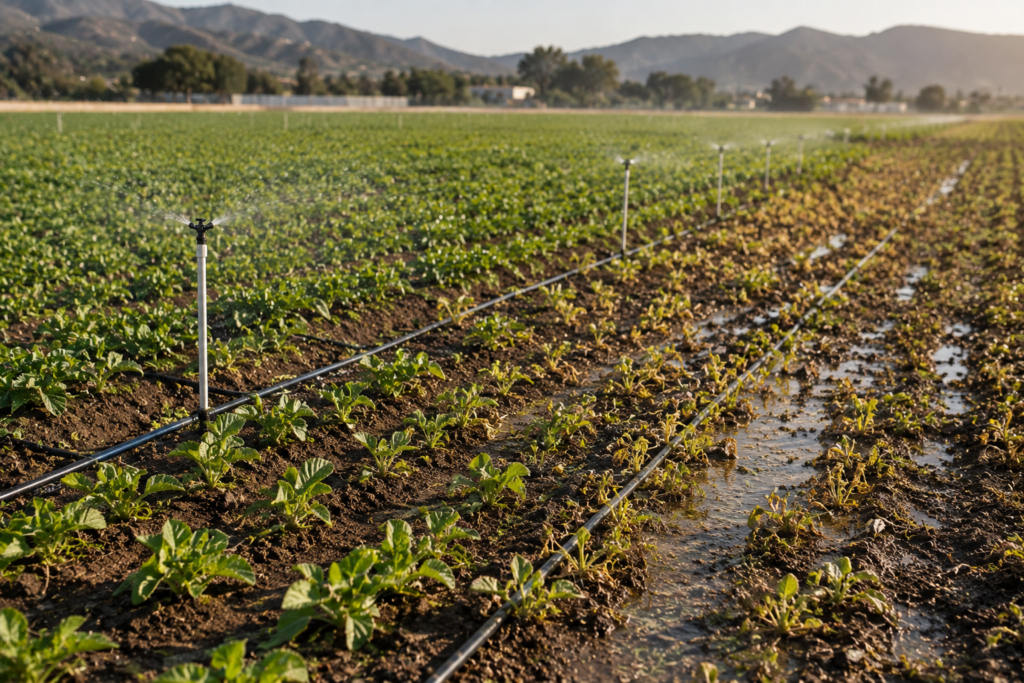
The same principle applies to agriculture, golf, turf, and landscape applications. Removing algae, slime, sand, grit, and other contaminants before water reaches irrigation equipment can help protect emitters and maintain more consistent system operation. Yardney Water Filtration Systems Sand Media Filters use a two-stage deflector to distribute incoming water across the media bed while helping avoid channeling, along with a hydraulically balanced underdrain designed to support filtration and backwashing performance.
Preventing breakthrough is ultimately about maintaining control of the entire water treatment process rather than reacting only after water quality has deteriorated.
Frequently Asked Questions About Filter Media Breakthrough
Because breakthrough can have several causes, diagnosing it requires more than simply replacing media. These common questions help clarify what operators should consider when filtration performance changes.
Does breakthrough mean the filter media needs to be replaced?
Not necessarily. Particle breakthrough may indicate excessive filter-run length, inadequate backwashing, hydraulic surges, excessive filtration rates, source-water changes, channeling, or problems with other filter components. The cause should be identified before assuming the media itself has reached the end of its useful life.
Adsorptive media such as GAC is different. When contaminant breakthrough occurs because adsorption capacity is being exhausted, media replacement or regeneration may eventually be required.
Can improper backwashing cause filter media to leave the vessel?
Yes. Excessive backwash velocity can carry media out of a filter, while poor hydraulic distribution can disturb the bed unevenly. Backwash rates should therefore be matched to the media, equipment design, water conditions, and operating requirements. Effective backwashing cleans the bed without unnecessarily removing or disrupting the filtration media.
How can operators recognize that breakthrough may be developing?
Indicators depend on the application but may include increasing effluent turbidity, higher particle counts, declining contaminant removal, shortened filter runs, unusual differential-pressure behavior, visible media downstream, or changes in downstream equipment performance.
Monitoring trends is especially valuable. A gradual change in performance over several filter cycles may reveal a developing problem before it becomes a significant water-quality or maintenance issue.
Can the right pretreatment reduce breakthrough problems?
Yes. Pretreatment can reduce the burden placed on downstream media. For example, removing suspended solids before GAC can help prevent unnecessary fouling of the carbon bed and allow the GAC to focus on its intended adsorption function.
The appropriate treatment train depends on the water. Yardney Water Filtration Systems can incorporate Sand Media, Multi-Media, Granular Activated Carbon, screen filtration, separation technologies, and specialized media into treatment strategies based on source-water characteristics and the required finished-water quality.
Why Partner with Yardney Water Filtration Systems
Reliable filtration begins with understanding the water, the application, and the performance required from the system. At Yardney Water Filtration Systems, we offer a complete line of filtration systems for industrial, commercial, municipal, agricultural, golf, turf, landscape, and irrigation applications. Our systems are engineered to address varied and demanding water-quality conditions while supporting dependable long-term performance.
Our industrial product line includes three distinctly different backwashing media filtration technologies: Sand Media, Multi-Media, and Granular Activated Carbon. Additional media selections are available for specialized applications involving iron, manganese, arsenic, organic clay, zeolites, Green Sand, and Green Sand Plus. As treatment requirements evolve, we also help customers evaluate filtration as part of broader strategies for water reuse, PFAS and other emerging contaminants, and increasingly complex municipal and industrial water-quality challenges.
Our products have continued to evolve and improve, but the principles behind reliable filtration remain the same. With filtration technology tested across hundreds of applications and thousands of installations, Yardney Water Filtration Systems understands that successful filtration depends on more than the media inside a vessel. Hydraulics, backwashing, contaminant loading, system configuration, operating conditions, and the treatment objective all need to work together.
If your facility is experiencing filter breakthrough, unexplained media loss, shorter filter runs, inconsistent water quality, or changing source-water conditions, Yardney Water Filtration Systems can help determine an appropriate filtration approach. Call 951.656.6716 or email [email protected] to discuss your application and water treatment requirements.