An irrigation system can only perform as well as the water moving through it. Pumps, pipelines, valves, drip emitters, microsprinklers, and other components may be properly designed and maintained, but poor source water quality can gradually undermine the entire system. Sediment, algae, organic matter, dissolved minerals, and other contaminants can restrict flow, clog emitters, increase maintenance requirements, and reduce the uniformity of water application.
For golf courses, landscape managers, and other irrigation users, these problems are more than equipment inconveniences. When an irrigation filtration system cannot adequately address the conditions present in the source water, poor water distribution can affect plant health, irrigation scheduling, operating costs, labor requirements, and the useful life of irrigation equipment.
The challenge is that source water is rarely consistent. Surface water from ponds, reservoirs, canals, rivers, and reclaimed-water systems may contain suspended solids and biological material. Groundwater may introduce sand, iron, manganese, dissolved minerals, or chemical conditions that lead to precipitation inside the irrigation system. Even the quality of water from the same source can change seasonally.
Source Water Quality Is an Irrigation System Issue
Source water quality is sometimes viewed primarily as a crop or plant-health concern. While the chemical characteristics of irrigation water certainly matter to soil and plants, its physical and biological characteristics also have a direct effect on irrigation equipment.
The University of California Agriculture and Natural Resources explains that suspended materials in irrigation water may include inorganic particles such as sand, silt, and clay as well as organic materials including algae, bacteria, plant debris, and other matter. UC ANR recommends filtration for water containing suspended particulate material because these contaminants can contribute to emitter clogging.
This becomes particularly important with drip irrigation filtration and microirrigation systems. Small emitter passages allow water to be delivered precisely, but those same small passages are vulnerable to obstruction. A contaminant that seems insignificant when looking at a pond, well, or canal can become significant when thousands of gallons of water repeatedly pass through small emitters.
Water quality should therefore be considered during irrigation system design rather than after clogging develops. Testing the source water and understanding the nature, size, concentration, and variability of contaminants allows the filtration equipment to be matched to the actual challenge.
Sediment and Suspended Solids Can Gradually Restrict the System
Sand, silt, clay, and other suspended solids are among the most common physical contaminants affecting irrigation systems. Surface water may pick up sediment through runoff, erosion, canal movement, storms, and normal seasonal changes. Wells can also introduce sand or other mineral particles, particularly when pumping conditions or the well itself changes.
Larger particles can cause obvious problems, but smaller particles should not be overlooked. Fine material may travel farther into the system and settle where water velocity decreases. UC ANR notes that particles small enough to pass through some agricultural filters may settle in areas such as the ends of lateral lines, where accumulation can eventually contribute to emitter clogging.
As sediment accumulates, operators may experience declining emitter discharge, increased pressure differential, more frequent flushing, and inconsistent irrigation patterns. What begins as a water quality problem eventually becomes an irrigation performance problem.
Effective sediment filtration for irrigation helps remove problematic material before it can move downstream. The correct filtration technology depends on factors such as particle size, contaminant concentration, flow requirements, irrigation equipment, and how much water must be processed.
Organic Matter and Algae Create a Different Filtration Challenge
Surface water can present challenges that differ substantially from groundwater. Ponds, lakes, reservoirs, canals, and other open sources can contain algae, leaves, plant fragments, microorganisms, and other organic material. The amount of biological material can also fluctuate dramatically with temperature, nutrient levels, rainfall, and seasonal conditions.
Organic contamination is particularly challenging because it does not always behave like mineral sediment. Algae and biological matter may be soft, fibrous, sticky, or irregularly shaped. Small particles can move through the system and combine with other material downstream.
UC ANR identifies algae and bacteria as major contributors to biological clogging and explains that biological growth can become especially problematic when irrigation water also contains organic sediments, iron, or hydrogen sulfide.
The result can be slime formation inside drip lines and emitters, increasing the likelihood of restrictions that are difficult to see during a routine visual inspection. Because these contaminants behave differently than inorganic sediment, selecting a filtration system based only on a nominal particle size may not adequately address the source-water challenge.
For applications with significant organic loading, sand media filtration can be an important component of irrigation water treatment. System selection, however, should always be based on actual water conditions rather than assuming that one filtration technology is appropriate for every irrigation source.
Iron, Manganese, and Mineral Precipitation Can Clog Irrigation Equipment
Poor irrigation source water does not have to look dirty to cause problems. Groundwater can appear relatively clear while containing dissolved constituents that create deposits after the water is pumped, exposed to air, mixed with other water, or subjected to changing chemical conditions.
Iron is one example. Dissolved iron can oxidize and form insoluble material, while iron bacteria can contribute to slime formation. Manganese can create similar concerns under certain conditions. Calcium carbonate and other mineral deposits can also form inside irrigation equipment depending on water chemistry.
UC ANR notes that chemical precipitate clogging is most commonly associated with groundwater and identifies calcium carbonate and iron among common precipitates.
These deposits may accumulate inside emitters, valves, pipes, or other irrigation components. Because the original contaminant may have entered the system in dissolved form, simply installing a basic screen does not necessarily solve the problem. The water chemistry, treatment objective, oxidation requirements, filtration media, and downstream equipment must be considered together.
Specialized treatment media can be used for applications involving iron removal, manganese removal, and arsenic removal, depending on the specific water conditions and treatment objectives. Understanding what is actually present in the source water is essential before determining the appropriate treatment strategy.
Clogged Emitters Reduce Irrigation Uniformity
One of the most important consequences of poor source water quality is reduced distribution uniformity. A functioning irrigation system is designed to deliver predictable quantities of water throughout the irrigated area. When some emitters begin to clog while others continue operating normally, that uniformity deteriorates.
UC ANR defines distribution uniformity as a measure of how evenly water is applied throughout a field and notes that clogging both reduces uniformity and decreases the amount of water applied.
Partial clogging can be particularly troublesome because it may not be immediately obvious. A completely blocked sprinkler or emitter can attract attention. An emitter delivering somewhat less water than intended may continue operating unnoticed while the plant or soil around it receives inadequate irrigation.
Operators may respond by increasing irrigation run times, but that does not necessarily correct the underlying problem. Areas served by unrestricted emitters may then receive excess water while restricted sections remain under-irrigated. The result can be greater water consumption without achieving the desired uniformity.
For agriculture, that can contribute to inconsistent crop performance. For golf courses and large landscapes, it can create visible differences in turf or plant health. Protecting distribution uniformity through appropriate water filtration systems for irrigation therefore supports both operational efficiency and more effective water management.
Poor Water Quality Can Increase Pressure and Energy Problems
Contamination affects more than the point where water exits the irrigation system. As filters load with debris and flow paths become restricted, pressure conditions throughout the system can change. Operators may begin noticing greater differential pressure across filtration equipment or inadequate pressure farther downstream.
Pressure problems can become increasingly difficult to diagnose when sediment accumulation, clogged filters, restricted emitters, and hydraulic design issues overlap. A pump may appear to be the problem when the actual cause is increasing restriction elsewhere in the system.
Frequent filter loading also creates an operational burden. If filtration equipment is undersized or poorly matched to the source water, excessive cleaning or backwashing may be required to maintain acceptable flow. That can increase water use, energy consumption, maintenance labor, and system downtime.
Properly designed automatic backwash filtration can reduce the amount of manual intervention required, but automation does not eliminate the need to choose the correct technology and capacity. A filtration system must be engineered around expected flow rates, contaminant loading, water source, downstream irrigation equipment, and operating requirements.
Water Chemistry Can Affect the Soil as Well as the Equipment
Not every source-water problem can be solved through mechanical filtration. Salinity, sodium, pH, alkalinity, and specific ions can affect soil structure, infiltration, and plant performance even when the irrigation water looks clean.
This distinction is important. Filtration is highly effective for targeted physical contaminants and can be incorporated into treatment strategies for certain chemical contaminants, but conventional particulate filtration does not remove every dissolved constituent.
A comprehensive approach begins with knowing what is in the water. Water testing can help determine whether the primary concern is suspended solids removal, organic contamination, mineral precipitation, salinity, iron, manganese, arsenic, or a combination of conditions.
Water Sources Change, and Filtration Requirements Can Change With Them
A filtration system designed around a single water sample may not tell the whole story. Surface-water quality can change after heavy rainfall, during algae blooms, as reservoir levels fall, or as agricultural runoff and seasonal conditions change. Groundwater characteristics can also shift over time.
Water reuse adds another dimension. As agricultural operations, golf courses, commercial properties, and municipalities increasingly explore water reuse and sustainability, irrigation systems may be asked to operate with alternative water sources that have different physical, chemical, or biological characteristics.
That does not mean alternative water sources cannot be used successfully. It means treatment must be appropriate for the water. As water supplies become more diversified, understanding source-water variability becomes increasingly important to maintaining reliable irrigation performance.
Periodic water testing, pressure monitoring, emitter inspections, flushing, and evaluation of filter performance can help operators identify changes before they become widespread system problems.
Selecting Filtration Based on the Actual Water Source
There is no universal irrigation filter that is ideal for every source. Agricultural irrigation filtration for canal water containing algae and organic debris may require a different approach than filtration for groundwater containing fine sand. Water with iron or manganese creates different treatment considerations again.
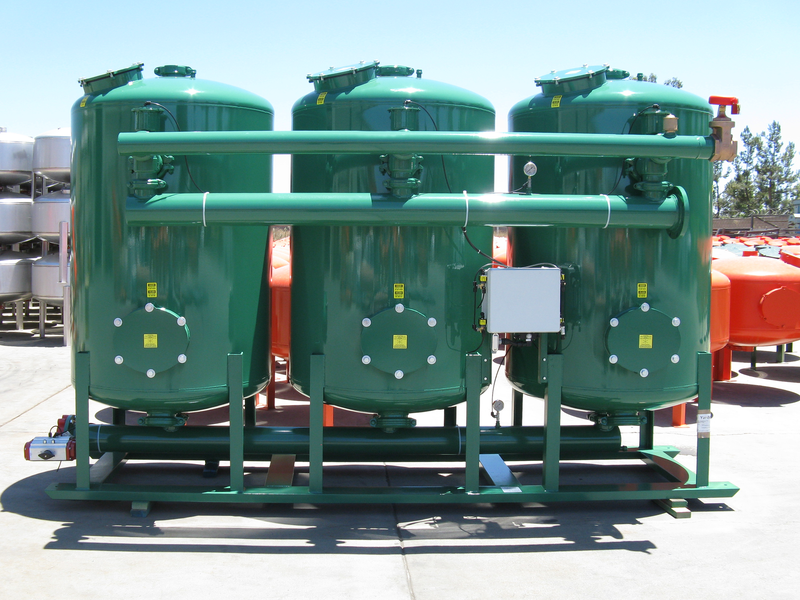
Sand media filters are commonly used when water contains substantial organic matter or fine suspended material. Screen filtration may be appropriate for other particulate-removal applications, depending on particle characteristics and the degree of filtration required. Multi-media systems and specialized media provide additional treatment options for more demanding water-quality conditions.
The filtration decision should consider source-water analysis, flow rate, pressure, contaminant loading, required filtration level, irrigation equipment, available space, backwash requirements, maintenance expectations, and future changes in the water supply.
Yardney Water Filtration Systems provides a range of filtration technologies, including Sand Media, Multi-Media, and Granular Activated Carbon systems, as well as specialized media selections for specific water-treatment applications. For agricultural, golf, turf, and landscape applications, the objective is not simply to install a filter. It is to engineer filtration around the conditions the irrigation system actually encounters.
Better Filtration Supports Water Efficiency and Equipment Reliability
When irrigation water is adequately filtered, the benefits extend throughout the system. Cleaner water helps protect emitters, microsprinklers, valves, and pipelines from contaminants that can reduce performance. More consistent emitter discharge can help maintain better irrigation uniformity, allowing operators to schedule irrigation based on actual plant and soil requirements rather than compensating for poorly performing equipment.
Reliable filtration can also reduce the frequency of emergency cleaning and troubleshooting. Maintenance does not disappear, because every irrigation system requires appropriate monitoring and service, but preventive filtration can shift maintenance away from repeatedly correcting downstream problems.
This is particularly valuable for large agricultural operations, golf courses, commercial landscapes, and other applications where an irrigation system may contain thousands of emission points. A small water-quality problem multiplied across a large network can become a significant operational expense.
Investing in the right irrigation water filtration system is therefore about more than producing visually cleaner water. It is about protecting the performance of the complete irrigation infrastructure.
Frequently Asked Questions
Source water quality varies considerably from one irrigation application to another, so filtration decisions should be based on actual operating conditions. The following questions address several common concerns about poor irrigation water quality and filtration.
What contaminants most commonly cause irrigation system clogging?
Common causes include sand, silt, clay, algae, organic debris, bacterial growth, and chemical precipitates such as iron or calcium carbonate. The exact risk depends on whether the water comes from a well, canal, pond, reservoir, reclaimed-water source, or another supply.
Testing and inspecting the water helps determine whether the primary problem is particulate, biological, chemical, or a combination of these factors.
Can poor source water damage a drip irrigation system?
Yes. Drip systems are particularly vulnerable because emitters contain small flow passages. Suspended particles, biological growth, and mineral deposits can partially or completely restrict these passages.
Partial clogging can be especially difficult to recognize because water may still be flowing. Monitoring emitter discharge and irrigation uniformity can reveal developing problems before large portions of the system become severely restricted.
How often should irrigation source water be tested?
Testing frequency depends on the water source and how variable its quality is. A well with historically stable water chemistry may require a different monitoring schedule than a pond or canal that experiences substantial seasonal changes.
Water should also be reevaluated when operators notice unexplained changes in filter loading, pressure differential, emitter discharge, staining, deposits, biological growth, or irrigation uniformity. Changes to the source itself are another reason to obtain updated water-quality information.
Is sand media filtration always the best choice for irrigation?
No single filtration technology is appropriate for every application. Sand media filtration is particularly useful for certain water sources containing organic matter and suspended solids, but other applications may benefit from screen filtration, multi-media filtration, specialized treatment media, or a combination of technologies.
The best system is determined by the contaminants present, particle characteristics, flow requirements, downstream equipment, and treatment objectives.
Why Partner with Water Filtration Systems
Poor source water can quietly reduce irrigation system performance long before the problem becomes obvious in the field. Sediment, organic matter, algae, iron, manganese, and other contaminants can contribute to clogged emitters, inconsistent water application, increased maintenance, pressure problems, and unnecessary operating expenses. Addressing those contaminants upstream helps protect the entire irrigation system.
Yardney Water Filtration Systems offers a complete line of filtration systems for demanding agricultural, industrial, and commercial applications. Our filtration technologies include Sand Media filtration, Multi-Media filtration, Granular Activated Carbon filtration, and specialized media options for applications involving iron, manganese, arsenic, and other water-quality challenges. Our products have continued to evolve, but the fundamental focus remains the same: reliable filtration engineered around real-world water conditions.
For agriculture, golf, turf, and landscape applications, we understand that acreage, water sources, contaminant loads, irrigation designs, and operating requirements vary widely. Our filtration technology has been tested across hundreds of applications thousands of times over, giving us the experience to help identify a solution suited to the source water and the irrigation system it must protect.
If poor source water quality is affecting your irrigation system, or if you are designing a new system and want to prevent problems before they begin, contact Yardney Water Filtration Systems to discuss the application. Call 951.656.6716 or email [email protected] to learn more about selecting a filtration solution built for dependable performance.