Iron Removal Filtration Systems for Municipal Water
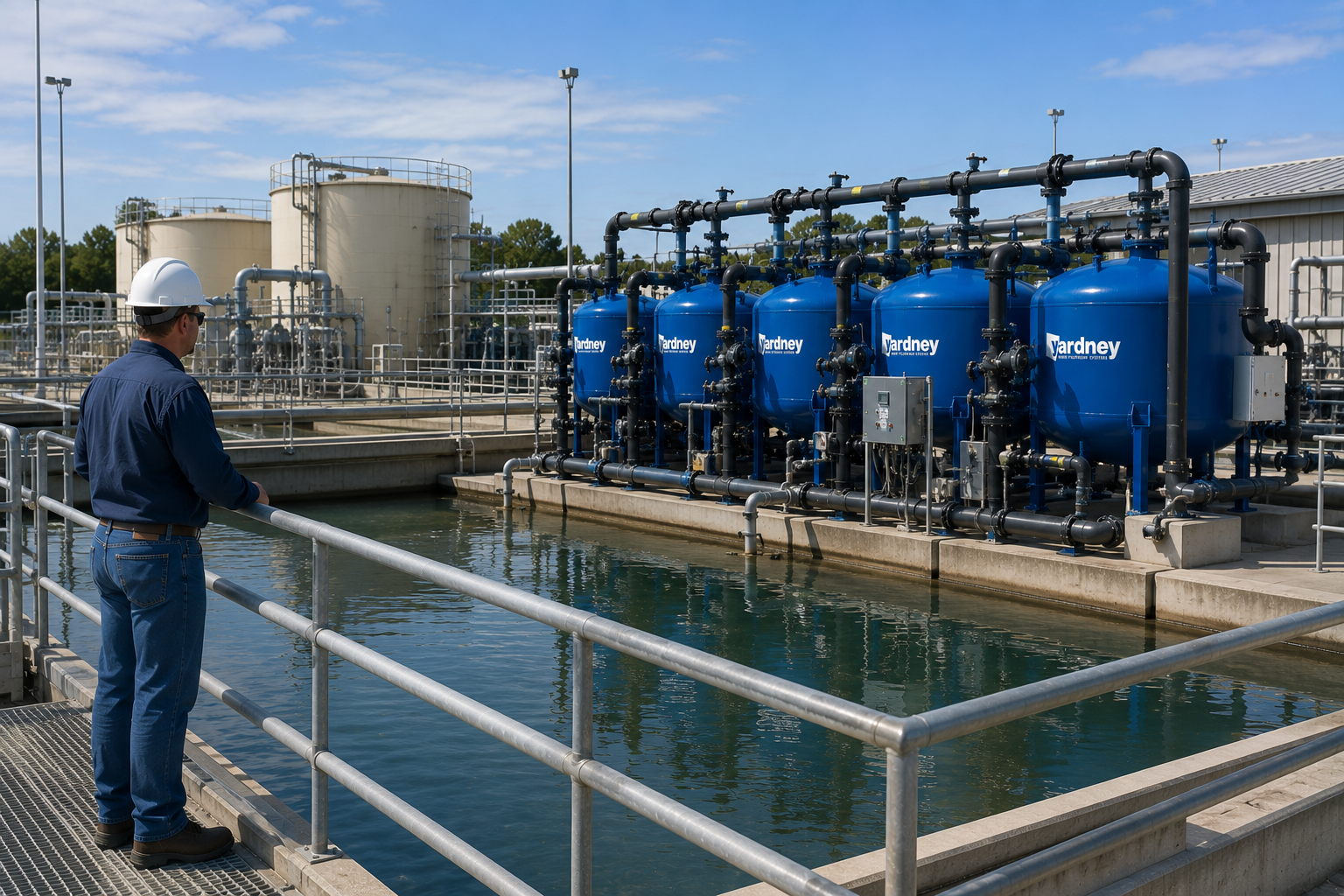
Iron removal filtration for municipal water captures particulate iron and associated solids so water stays clear and iron does not build up in pipes, tanks, and fixtures.
Yardney Multi Media systems with IMA-65 specialty media are listed for iron, manganese, and arsenic removal.
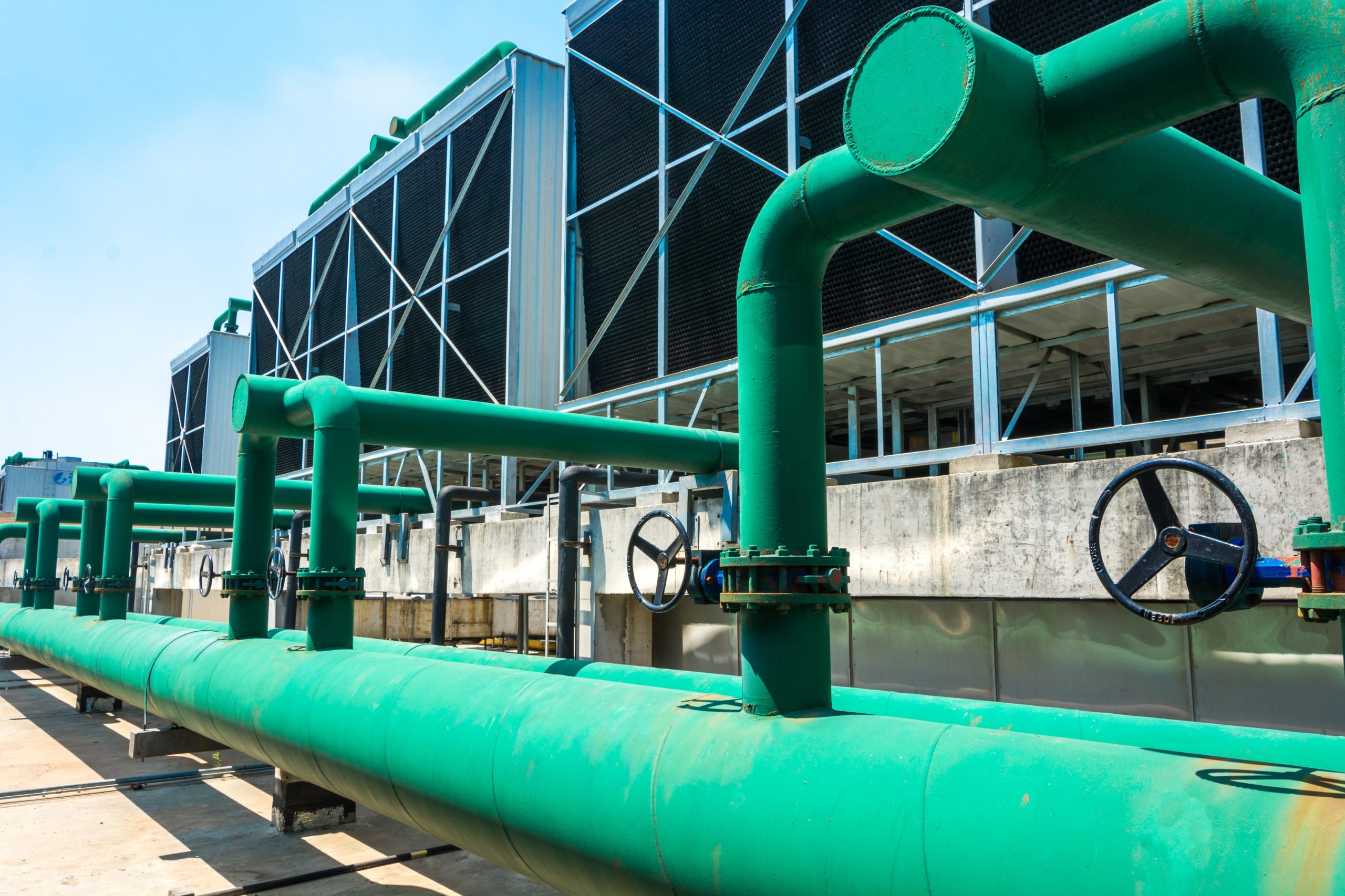
Iron in potable water can cause discoloration, taste issues, scaling, and distribution system fouling when not properly managed. Filtration supports iron removal by capturing particulate iron and associated solids.
Dissolved iron is typically oxidized into solid particles that filtration then removes. Oxidation works best when pH is above about 6.8, so water chemistry shapes the design.
Clearer Water: Improve clarity and reduce discoloration at the tap.
Less Buildup: Reduce deposits in pipes and fixtures.
Stable Water Quality: Stabilize quality for customers and operators.
Fewer Complaints: Cut staining and taste calls tied to iron.
Yardney Multi Media systems filter organic and inorganic suspended solids down to 5 microns and are supplied skid mounted and fully assembled. IMA-65 specialty media is listed for iron, manganese, and arsenic, and the Payette case study states that it removes iron and manganese without potassium permanganate.
Backwash starts automatically on elapsed time or pressure differential, and multi-tank systems clean one tank at a time.
Applications
Standard Assembly Includes (Multi Media systems)
Available Options
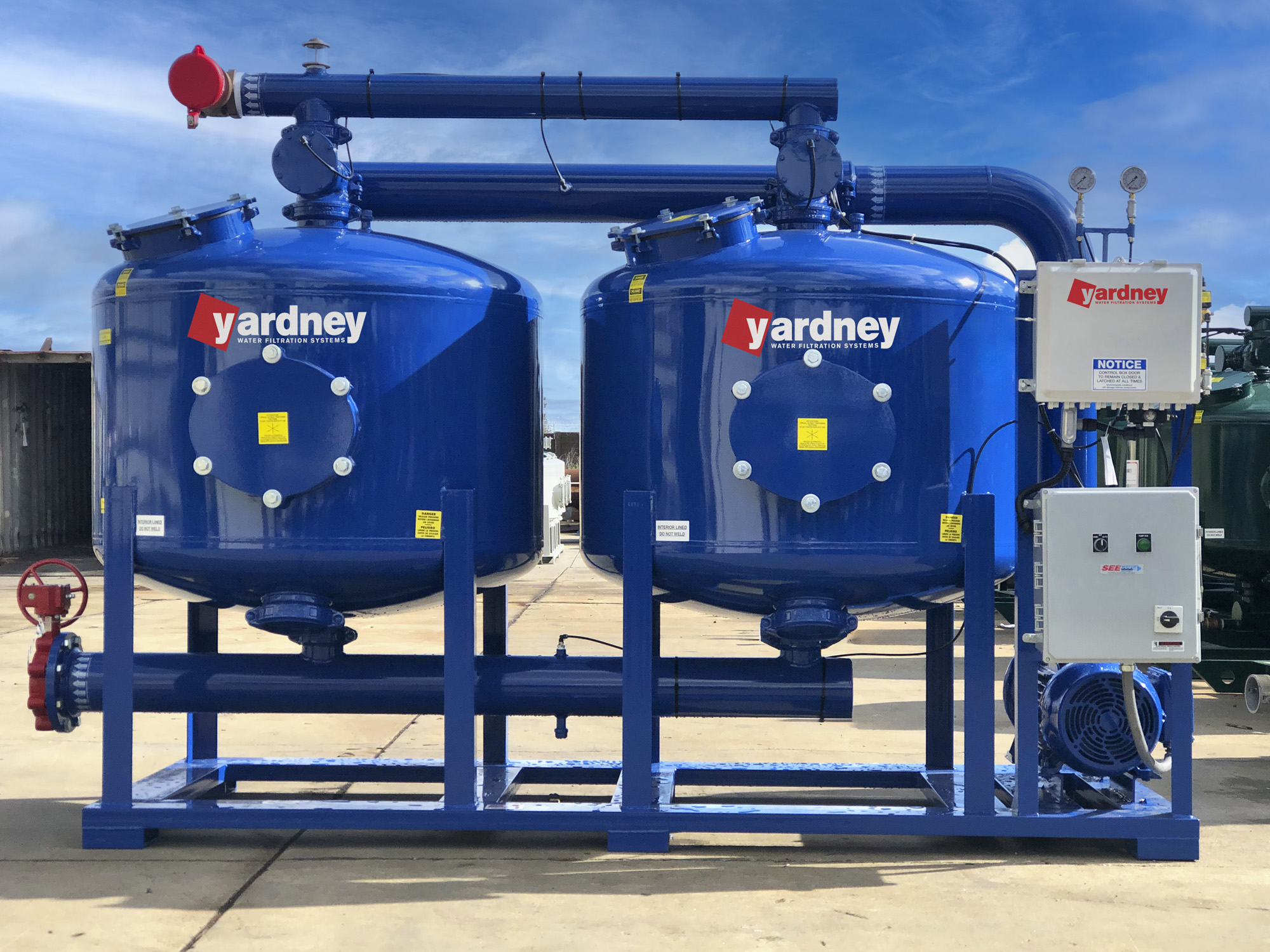
Iron levels, pH, and any oxidant used determine media depth and flow rates, so each system is sized from site data.
Multi Media: organic and inorganic suspended solids down to 5 microns; from 10 gpm; automatic backwash by elapsed time or pressure differential
Specialty Medias: IMA-65 for iron, manganese, and arsenic; supplied in systems or as replacement media
Sand Media: organic and inorganic suspended solids down to 20 microns; backwash runs one tank at a time
The City of Payette, Idaho, runs an indoor municipal pool year-round. Iron in the makeup water stained the pool and floors, and the city’s phosphate additive lost effectiveness against the pool’s chlorine residual.
A Yardney filter with three 24-inch IMA-65 vessels treats 50 gpm at 100 psi. Iron in the effluent tested below 0.01 ppm, and the pool stayed free of staining for over three years.
Iron can cause discoloration, taste issues, scaling, and fouling in the distribution system. Customers notice it as stained fixtures and cloudy or colored water.
Dissolved iron is oxidized into solid particles, which filtration then removes. Oxidation works best above about pH 6.8, so water chemistry matters.
IMA-65 is Yardney’s specialty media for iron, manganese, and arsenic. In the Payette case study it removed iron and manganese without potassium permanganate.
Media filters backwash on elapsed time or pressure differential, sending the captured solids to the backwash manifold. Multi-tank systems clean one tank at a time.
Multi Media systems start at 10 gpm, and the Payette system treats 50 gpm. Share your flow and iron levels so Yardney can size the system.