
Industrial Applications
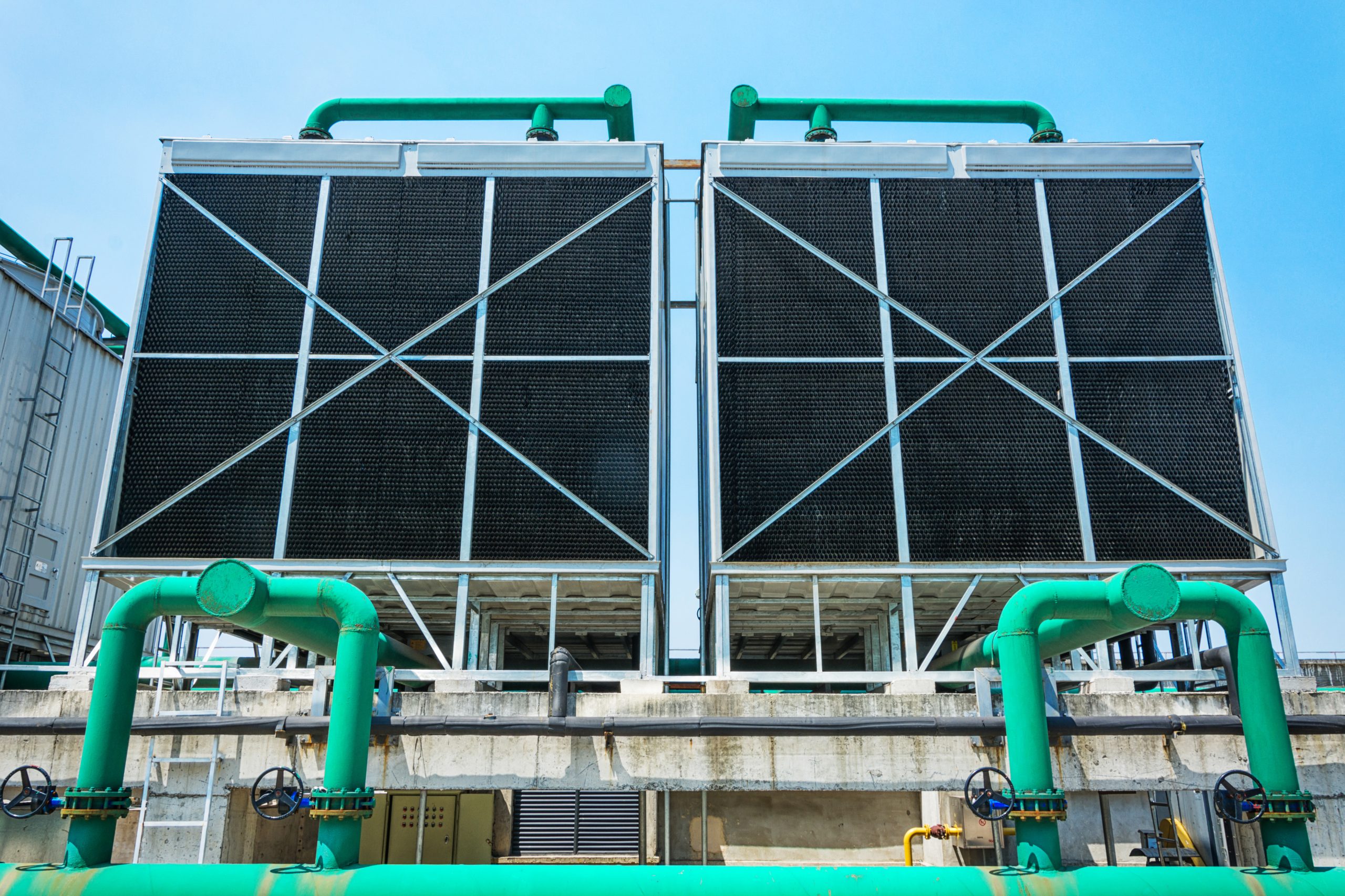
Cooling tower basins collect debris, dirt, scale, and biological growth that can foul heat exchangers, restrict flow, and reduce system efficiency. Filtration at the basin and recirculation points helps remove suspended solids before they circulate through critical equipment, improving heat transfer performance, reducing maintenance and chemical demand, and protecting condensers, plate-and-frame units, and downstream process cooling loops.
Dewatering applications often involve high solids loads—sand, silt, fines, and suspended debris—that can overwhelm pumps and clog nozzles or piping. Filtration supports cleaner discharge, improved reclaim potential, and better protection for downstream treatment or reuse systems by removing solids early, stabilizing water quality, and reducing wear on equipment operating in harsh environments.
Environmental cleanup & remediation
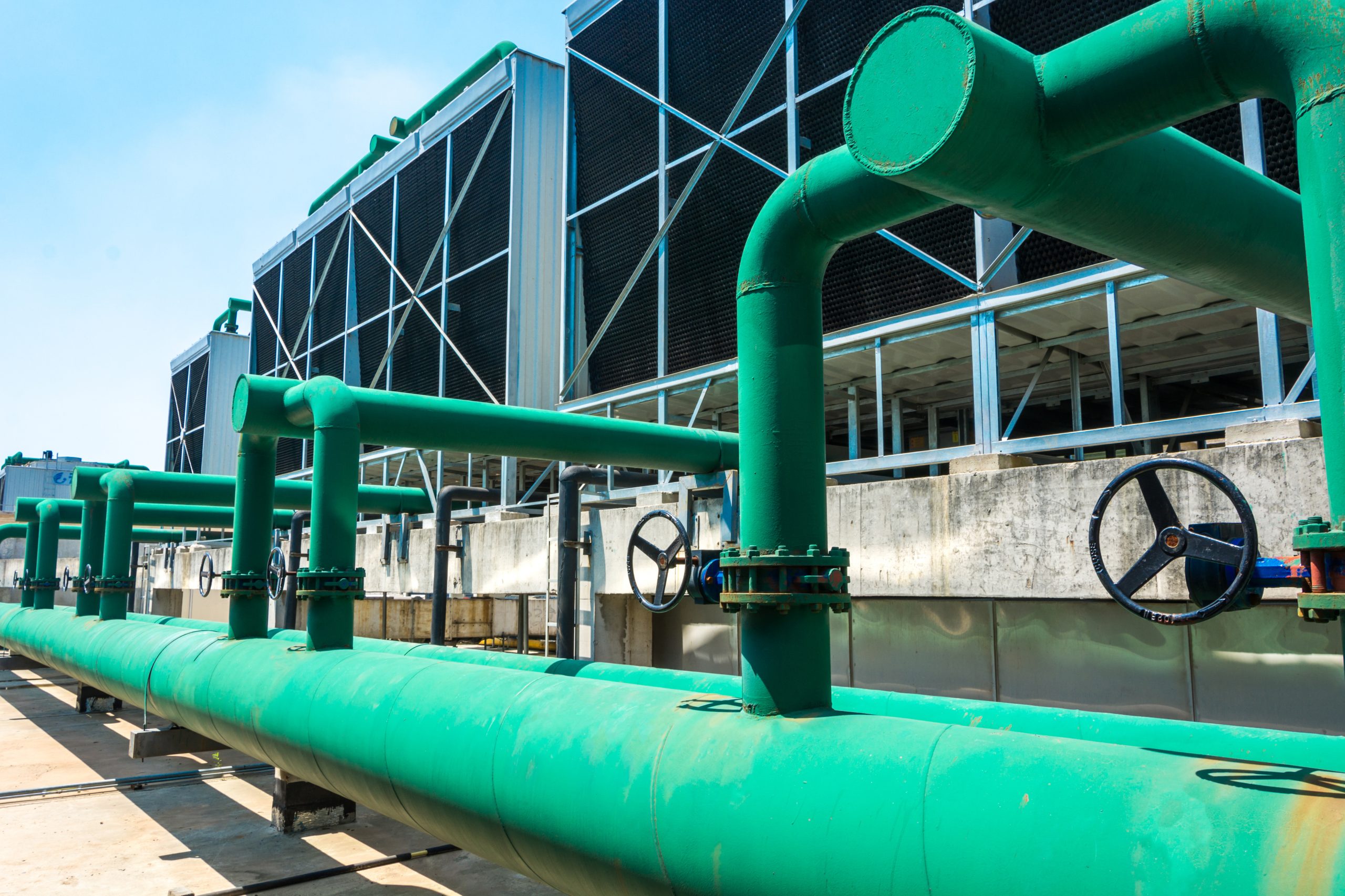
Remediation and cleanup projects frequently require reliable treatment of variable influent water containing sediment, organics, and site-specific contaminants. Filtration provides a critical first barrier to remove suspended solids and protect advanced treatment stages, improving overall process stability and helping systems meet compliance targets when water quality fluctuates due to rainfall events, excavation activity, or changing groundwater conditions.

Process water quality directly impacts product consistency, equipment uptime, and operating costs—especially where spray nozzles, cooling passages, or precision components are involved. Filtration helps control particulates and suspended solids that cause plugging, abrasion, and scaling, supporting smoother operations, fewer shutdowns, and more predictable performance in wash lines, recirculation loops, and closed or semi-closed process systems.
Manufacturing sites often require filtration for incoming plant water, equipment wash water, coolant loops, and reuse systems where solids can damage pumps, clog sprays, and reduce throughput. By removing particulate contamination early and continuously, filtration helps protect production equipment, reduce maintenance disruptions, improve water reuse potential, and support stable quality in high-demand production environments.
Reverse osmosis systems require strong pre-filtration to prevent membrane fouling, scaling, and pressure drop that reduce performance and increase operating cost. Proper upstream filtration removes suspended solids and particulate matter before the RO stage, helping extend membrane life, reduce cleaning frequency, improve permeate consistency, and maintain efficient operation under varying feedwater conditions.
Ion exchange systems perform best when protected from particulates that can foul resin beds, restrict flow, and reduce treatment efficiency. Pre-filtration reduces suspended solids before water enters the IX stage, helping extend resin life, maintain consistent water quality, and reduce maintenance events—especially in applications involving variable incoming plant water or recycle streams.
UV treatment depends on good water clarity because suspended solids and turbidity can shield microorganisms and reduce disinfection performance. Filtration ahead of UV improves transmittance by removing particulates, helping UV systems operate more effectively, reduce energy waste, and deliver more consistent disinfection results for process water, reuse, or discharge treatment.
Membrane systems—microfiltration, ultrafiltration, and related processes—are sensitive to solids loading and require consistent pre-filtration to avoid rapid fouling and loss of flux. Removing suspended solids upstream improves membrane run time, reduces cleaning cycles, stabilizes operating pressure, and supports dependable treatment performance when influent quality changes over time.
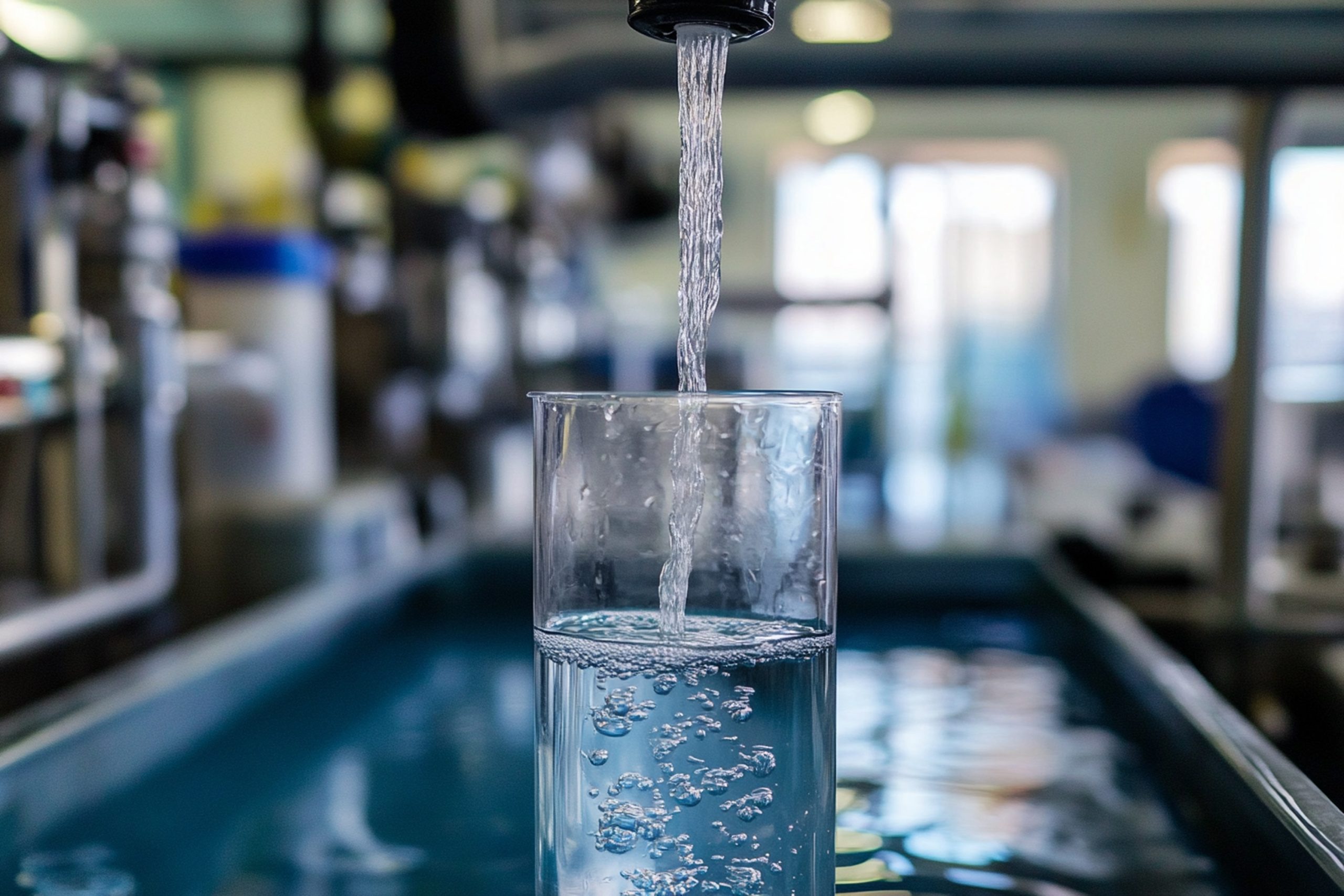
Process water often needs stable filtration performance to protect equipment, maintain product quality, and support repeatable outcomes across shifts and seasons. Filtration removes suspended solids that cause plugging, abrasion, and downstream variability, enabling smoother operations in recirculation loops, wash applications, and feedwater conditioning for sensitive industrial processes.
Pulp & Paper
Pulp and paper facilities commonly manage fiber, fines, and solids in process and reuse streams that can clog sprays, foul equipment, and disrupt production. Filtration improves reliability by removing suspended solids, supporting cleaner process water, better equipment protection, and more stable operations in wash-down, cooling, and reclaim applications where water quality must remain consistent.
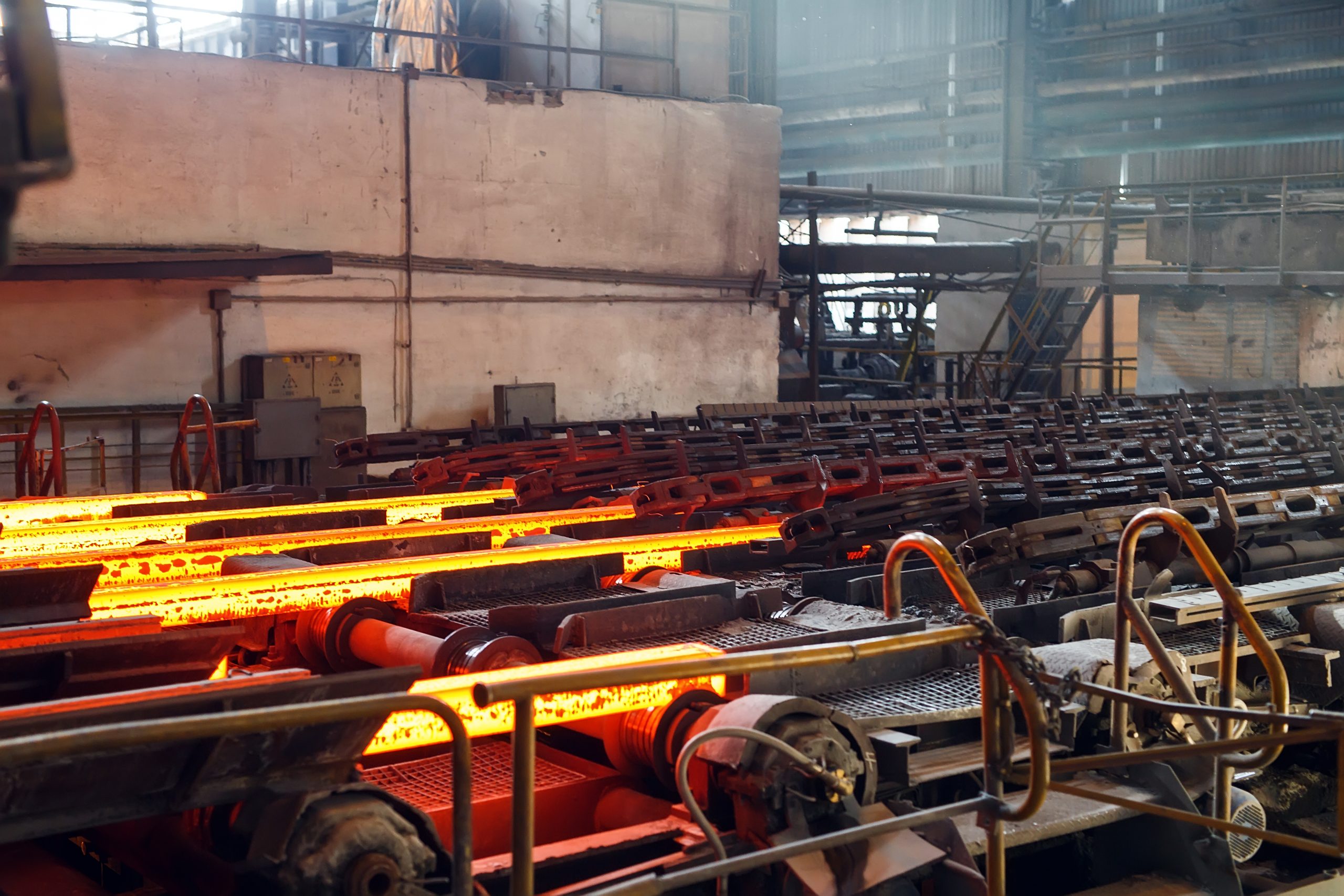
Steel mills use large volumes of cooling and process water that often contain scale, solids, and contaminants that can plug nozzles and reduce heat transfer efficiency. Filtration helps protect spray headers, heat exchangers, and critical cooling circuits by removing particulate matter, reducing downtime, and supporting more predictable equipment performance in harsh, high-heat environments.
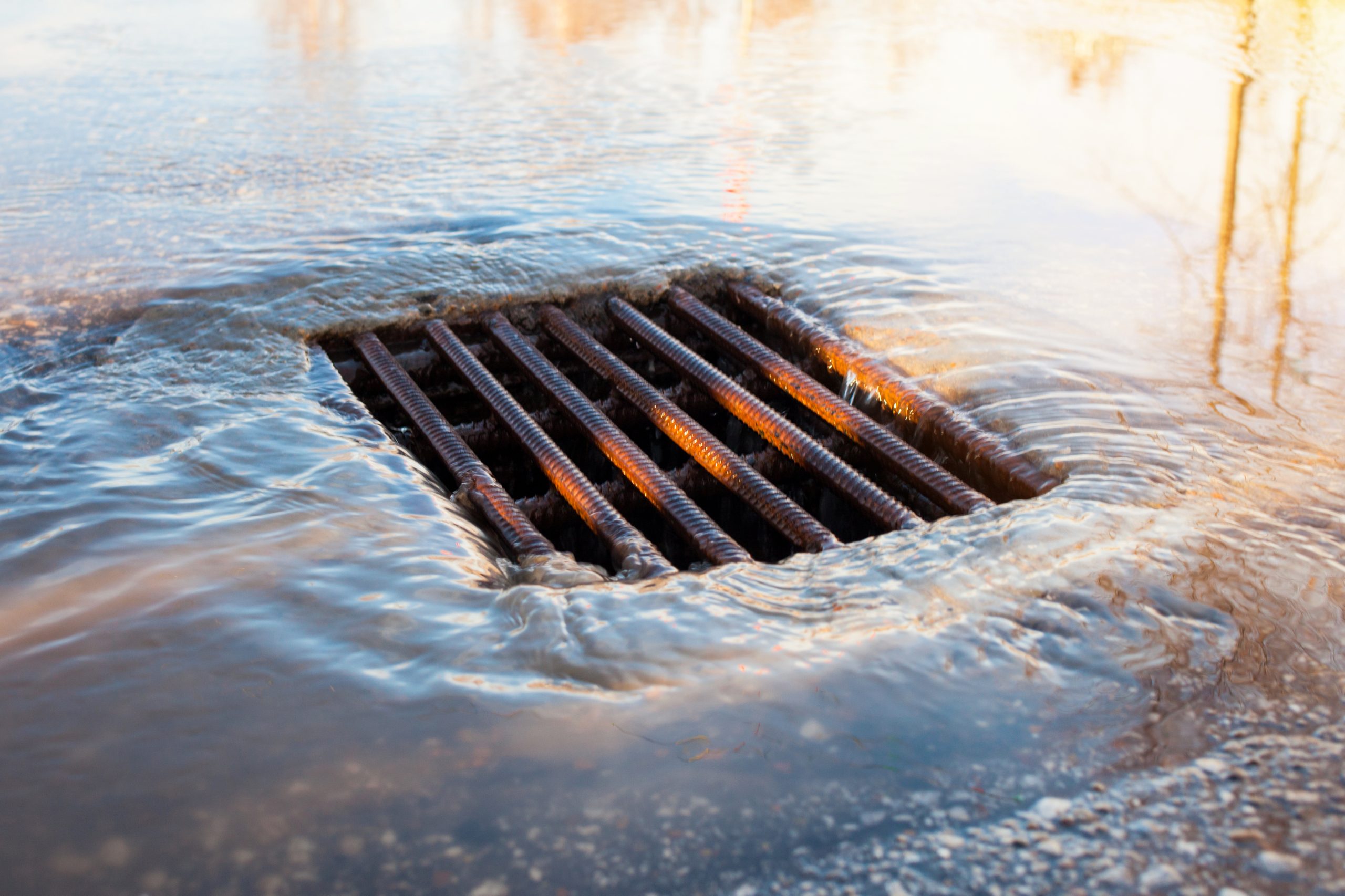
Storm water runoff can carry heavy solids loads—sand, silt, organic debris, and site contaminants—creating challenges for compliance and reuse. Filtration helps remove suspended solids early, improving downstream treatment efficiency, reducing sediment accumulation in basins and piping, and supporting cleaner discharge or recovery strategies during peak runoff events.
Wastewater streams often require solids removal to protect downstream treatment, improve compliance, and enable reuse opportunities. Filtration helps stabilize the process by removing suspended solids and debris that cause plugging and equipment wear, supporting more consistent treatment outcomes across changing influent conditions and load cycles.
Water intake sources—rivers, lakes, wells, or municipal feeds—can fluctuate in solids content, algae, and debris depending on season and operating conditions. Intake filtration removes particulates before they enter plant systems, helping protect pumps and downstream treatment, reduce fouling, and deliver more stable water quality for industrial processes and cooling applications.
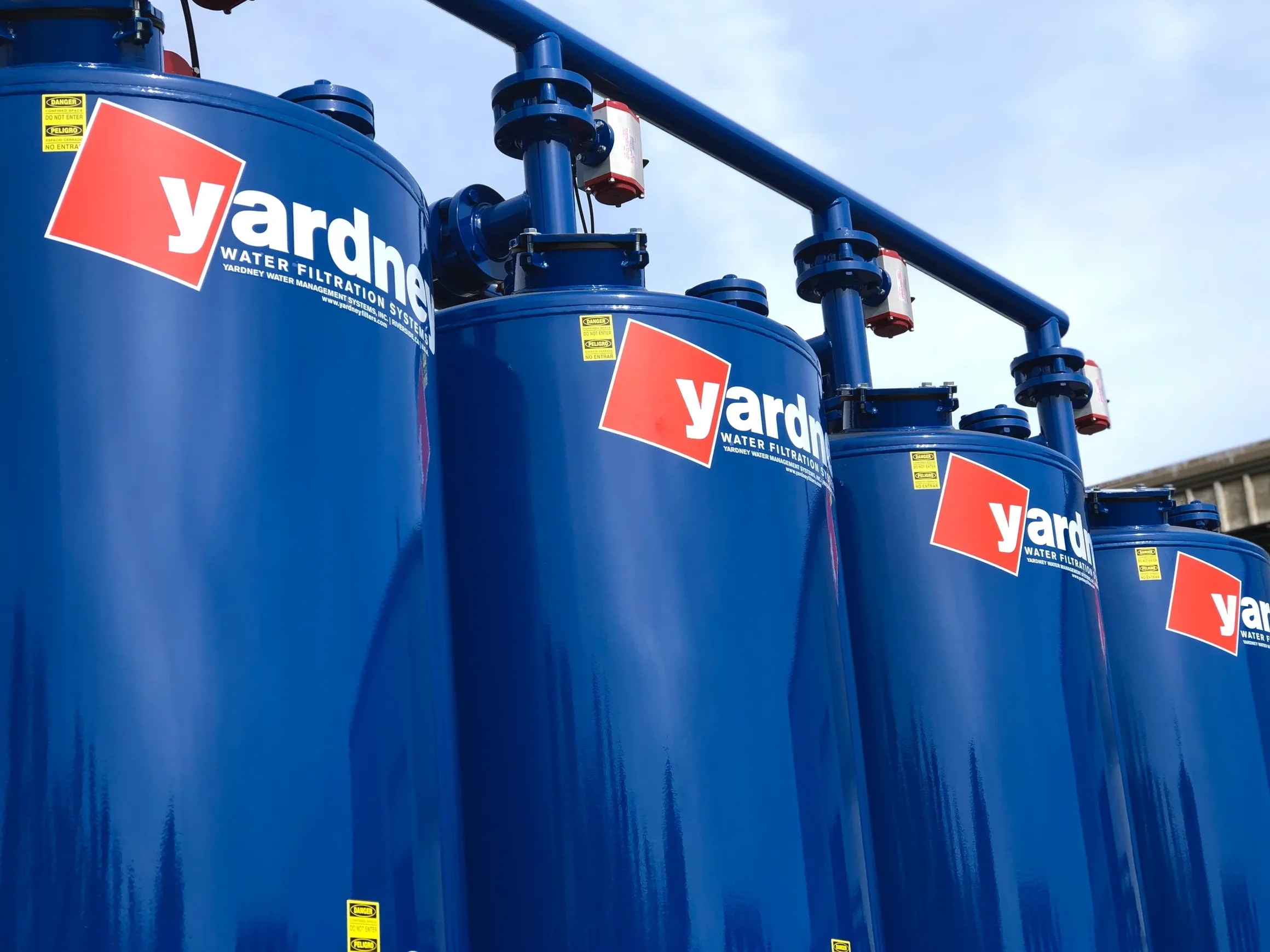
If your application isn’t listed, filtration selection can still be straightforward when based on water source, solids type, flow rate, and required protection level for downstream equipment. Yardney-style solutions can be configured for unique process conditions—whether the goal is solids removal, equipment protection, reclaim support, or pretreatment—so you get reliable performance without overcomplicating the system.